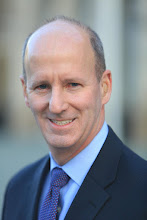
This article of mine is reprinted here, with permission, from the October 22, 2007 issue of the Pennsylvania Law Weekly.(c) 2009 Incisive Media US Properties, LLC. Further duplication without permission is prohibited. All rights reserved. Please contact the author for permission to reprint or duplicate this article.
LEARNING LESSONS FROM LAWYER JOKES:
Don’t be upset – use them as a motivator to improve, and discredit their sting
by
DANIEL E. CUMMINS, ESQUIRE
Lawyer jokes are an amusing, sometimes annoying, part of the practice. You’ve heard one, you’ve heard them all. With the negative sting of many of the lawyer jokes, it is easy to wince and give a wan smile while others laugh out loud with forced glee at the telling of such jokes.
Q: What’s the problem with lawyer jokes?
A: Lawyers don’t think they’re funny, and no one else thinks
they’re jokes.
Unfortunately, it is said that jokes in general require some modicum of truth to help make them funny. The act of getting upset at being the brunt of such jokes may lend them credence and may only serve to foster the telling of lawyer jokes. Perhaps a better way to react to lawyer jokes is not to be upset by them, but rather to use them as a motivator to better your practice and thereby contribute to improving the image of attorneys as a whole.
Q: How do you get a group of lawyers to smile for a picture?
A: Just say, “Fees!”
A main complaint by the public with lawyers is the fees charged and the manner in which they are charged. One way to avoid such criticism is to, wherever possible, politely remind the client that the result they seek, or have obtained, may not have been realized without the legal expertise provided.
In other cases where a favorable result for the client is not likely, the better practice may require an attorney to be up front with clients early in the attorney-client relationship about the futility of their claim or defense. This may serve to streamline the case, result in a quicker resolution, and save the client money in the long run, thereby improving the reputation of the attorney in terms of fees saved as a result.
Another way to avoid client complaints regarding the fees charged is to provide detailed, itemized bills that fully describe the services rendered. Clients may also be better served, as well as attorney reputations, if the clients are not unnecessarily double billed in the form of multiple attorneys or staff working on a single task.
Where a dispute arises with the client over attorney charges, it may also be the better practice to immediately attend to client questions about a bill with a willingness to compromise hopefully being present on both sides of the issue. A satisfied client obviously may be a repeat client or a source of other referrals. Therefore, a squabble over a few dollars in a present matter may not be worth the cost of other cases that could be realized in the future.
Another proactive way lawyers may offset the negative public perception regarding attorney fees may be through giving back to the community. Donations to local charities, volunteering time at local fundraisers, and participating in pro bono legal work all serve to display attorneys in a better light.
Q: Did you hear about the lawyer hurt in an accident?
A: An ambulance stopped suddenly.
There is probably no more common complaint against attorneys than their sometimes voracious pursuit of new clients. Yet, in a competitive world with a glut of attorneys, it appears that seeking out clients and attorney advertising is a necessary evil to support one’s practice.
Lawyers are commonly criticized for their rampant and sometimes crass advertisements and commercials. Perhaps a way to blunt such criticism is to instill more creativity into the advertising, maybe even humor, as opposed to the standard commercial of a somber attorney lamenting the woes of personal injuries and his or her ability to make all well again through a lawsuit.
One way to perhaps attract other clients is to include past clients in the advertising praising the positives of their experience with that attorney or firm. In this manner, rather than having the attorney patting himself on the back, the public will be hearing another member of the public speaking favorably of his or her experience.
In any event, attorneys should be mindful of the Rules of Professional Conduct 7.2 and 7.2 regarding “ambulance chasing” or direct contact with potential clients. Generally speaking, direct in-person solicitation of a prospective client by a lawyer is also frowned upon by the disciplinary board and should be avoided.
Q: What do you get when you cross a librarian with a
lawyer?
A: All the information you need, but you can’t understand a word of it.
* * * * * * *
Q: What do you get when you cross the Godfather with a
lawyer?
A: An offer you can’t understand.
Another common complaint about lawyers and legislators is their obstinate refusal to speak in plain, ordinary terms. Lawyers insist on using big words when little words would suffice [uh, when little words would do]. Legal jargon and Latin terms are still routinely used even though they should be avoided wherever possible when dealing with the public.
The problem of some lawyers refusing to utilize plain language has grown to the extent that awards are given out by the Bar when a lawyer is found to have fostered the use of plain English in his practice. So perhaps lawyer jokes in this regard can serve as a reminder to use plain English in our speech and writing whenever possible.
Q: How many lawyers does it take to change a light bulb?
A: None, they’d rather keep their clients in the dark.
Since the dawn of legal practice, clients have complained about the failure of lawyers to keep them apprised as to the status of their case. The problem had apparently more recently become so common that Rule of Professional Conduct 1.4 was promulgated which, in part, requires every attorney to “promptly comply with reasonable requests for information” and to otherwise “keep the client reasonably informed about the status of the matter.”
Perhaps if attorneys strived to keep their clients informed with a call or a letter every thirty to sixty days, there would be one less ‘how many lawyers does it take to change a light bulb’ joke.
Q: “You seem to be in some distress,” the judge said to the witness. “Is anything wrong?”
A: “Well, your Honor,” said the witness, “I swore to tell the truth, the whole truth, and nothing but the truth, but every time I try, some lawyer objects.”
The lesson to take from this joke is to keep objections to a minimum at trial. By objecting only when truly necessary, an attorney may be able to avoid the public perception, by a jury no less, that the attorney is attempting to hide something, or worse yet, is a bully.
To prevent any adverse inferences by the jury to an objection, it may also be wise to give a short explanation for the basis of the objection. Giving this short explanation may not only explain to the jury the valid reason for the objection, but may also be crucial for properly preserving the objection as a basis for an appeal.
It may also be wise, whenever possible, to keep sidebar conferences with the judge to a minimum. Despite the best of instructions to a jury from a judge that sidebar conferences are a necessary part of a trial to deal with tangential issues, a jury will likely always feel that something is being kept from them and will also grow impatient with the delays caused by the conferences. The better practice may be to anticipate issues that may arise and address them with the court before the jury is brought into the room and put into the jury box.
Q: What’s the difference between a good lawyer and a great lawyer?
A: A good lawyer knows the law. A great lawyer knows
the judge.
This joke brings to mind scenes from The Verdict with Paul Newman and Civil Action with John Travolta and Robert Duvall in both of which movies is a pivotal scene in which the underdog lawyer is called into the judge’s chambers only to find the more experienced opposing counsel already in chambers having a friendly ex parte chit-chat with the judge. While friendly and courteous relations are to be encouraged between lawyers and the bench, attorneys and judges should strive to avoid the perception of the public, and of out-of-town attorneys, of any favoritism once the matter gets underway.
Q: How many lawyer jokes are there?
A: Just three, all the rest are true.
Lawyer jokes have unfortunately been an undying breed since the time of Shakespeare. Even up to today, on any given week, Leno or Letterman will unleash a zinger against lawyers to the delight of their audiences. On the internet, a simple Google search will reveal numerous web pages devoted to lawyer jokes.
While such jokes may never become extinct, their impact can be lessened by improved attorney conduct. Unfortunately, lawyers are not always adept at displaying themselves in the best light possible which is in part due to the adversarial and competitive nature of the practice. There will also always be some bad apples who will continue to highlight and foster a negative view of lawyers as a whole.
Yet, continued efforts by all members of the bar to better the image of lawyers through open and plain communication, professional and courteous behavior in the public eye, community service, and the zealous but sensible pursuit of justice on behalf of clients can all only serve to discredit the sting of lawyer jokes.
Daniel E. Cummins, Esquire is an insurance defense/coverage attorney with the Scranton, Pennsylvania law firm of Foley, Cognetti, Comerford, Cimini & Cummins (www.foleycognettilaw.com). In addition to being a civil litigation columnist for the Pennsylvania Law Weekly, he also writes for his own blog, Tort Talk, which provides updates on Pennsylvania civil litigation and insurance law issues (www.torttalk.com).
Wednesday, March 31, 2010

Tuesday, March 30, 2010
Recent Defense Verdict in Columbia County Medical Malpractice Case
Last Friday, March 26, 2010, a defense verdict was entered in the Columbia County Court of Common Pleas in the medical malpractice case of Carol Ann Kowalski and Michael Kowalski v. Bloomsburg Hospital and Robert Meloy, M.D., No. 2006-CV-843 MD (Columbia Co.).
Plaintiffs were represented by William Anzalone and Jamie Anzalone of the Anzalone Law firm in Wilkes-Barre, Pennsylvania. The individual doctor defendant was represented by James Doherty, Jr., Esquire and James Doherty, III, Esquire of the Scranton law firm of Scanlon, Howley & Doherty. The presiding Judge was the Honorable Scott W. Naus.
The case involved Plaintiff, Carol Ann Kowalski, who was recovering at the Bloomsburg hospital from a right knee replacement surgery, which took place on June 29, 2005. The surgery was performed by a Dr. Williams who placed the Plaintiff on a patient controlled morphine pump and ambient sleeping pill, as necessary. The patient was under the care of the hospital nursing staff from 10:30 p.m. on 6/29/05 until 7:00 a.m. on 6/30/05. During the course of the evening the patient was given a sleeping pill, pursuant to the surgeon’s order and her monitoring was all normal during the course of the early morning hours.
The Defendant, Dr. Meloy, an internist, was performing rounds on 6/30/05 on behalf of the surgeon Dr, Williams. Dr. Meloy was informed by the nurses that the patient was doing fine, her vitals were normal and that she was resting comfortably after having fallen asleep at 3:00 a.m. Dr. Meloy performed a preliminary evaluation on the patient and confirmed the findings of the nursing staff and then advised be would be back later to do a full physical exam after the patient woke up. Approximately 30 minutes later the patient was found to be in an alleged morphine overdose state.
Plaintiffs alleged that the Plaintiff suffered permanent frontal lobe brain damage from a morphine overdose, which they allege should have been identified in advance by the nursing staff and by Dr. Meloy at the time of his initial evaluation.
The defendant doctor, on the basis of the expert testimony presented, essentially argued that, as a doctor on rounds, it was within a reasonable standard of care for him to rely upon the representations of the nursing staff that cared for the Plaintiff through the night before and to defer a full examination of the patient until she woke up, particularly where there were no signs of distress.
No evidence was entered against the hospital by Plaintiffs at trial. Rather, the Plaintiffs focused their case on the Defendant doctor.
Plaintiffs’ experts:
- Dr. Richard Millman – standard of care for internist – From Rhode Island
- Ronald Burch, M.D., Ph.D (pharmacology)
- Michael Raymond, Ph.D (neuropsychologist)
- John Kline, Jr. , M.D. (physiatrist)
- Mona Yudkoff, RN – life care plan of over $1.5 million
Defense experts
- Gregory Kane, M.D. (internist at Jefferson)
- Wayne E. Dubov, M.D. (physiatrist)
Defense verdict:
Jury was out only approximately 40 minutes before returning with a defense verdict in favor of both Dr. Meloy and the Bloomsburg Hospital.
Plaintiffs were represented by William Anzalone and Jamie Anzalone of the Anzalone Law firm in Wilkes-Barre, Pennsylvania. The individual doctor defendant was represented by James Doherty, Jr., Esquire and James Doherty, III, Esquire of the Scranton law firm of Scanlon, Howley & Doherty. The presiding Judge was the Honorable Scott W. Naus.
The case involved Plaintiff, Carol Ann Kowalski, who was recovering at the Bloomsburg hospital from a right knee replacement surgery, which took place on June 29, 2005. The surgery was performed by a Dr. Williams who placed the Plaintiff on a patient controlled morphine pump and ambient sleeping pill, as necessary. The patient was under the care of the hospital nursing staff from 10:30 p.m. on 6/29/05 until 7:00 a.m. on 6/30/05. During the course of the evening the patient was given a sleeping pill, pursuant to the surgeon’s order and her monitoring was all normal during the course of the early morning hours.
The Defendant, Dr. Meloy, an internist, was performing rounds on 6/30/05 on behalf of the surgeon Dr, Williams. Dr. Meloy was informed by the nurses that the patient was doing fine, her vitals were normal and that she was resting comfortably after having fallen asleep at 3:00 a.m. Dr. Meloy performed a preliminary evaluation on the patient and confirmed the findings of the nursing staff and then advised be would be back later to do a full physical exam after the patient woke up. Approximately 30 minutes later the patient was found to be in an alleged morphine overdose state.
Plaintiffs alleged that the Plaintiff suffered permanent frontal lobe brain damage from a morphine overdose, which they allege should have been identified in advance by the nursing staff and by Dr. Meloy at the time of his initial evaluation.
The defendant doctor, on the basis of the expert testimony presented, essentially argued that, as a doctor on rounds, it was within a reasonable standard of care for him to rely upon the representations of the nursing staff that cared for the Plaintiff through the night before and to defer a full examination of the patient until she woke up, particularly where there were no signs of distress.
No evidence was entered against the hospital by Plaintiffs at trial. Rather, the Plaintiffs focused their case on the Defendant doctor.
Plaintiffs’ experts:
- Dr. Richard Millman – standard of care for internist – From Rhode Island
- Ronald Burch, M.D., Ph.D (pharmacology)
- Michael Raymond, Ph.D (neuropsychologist)
- John Kline, Jr. , M.D. (physiatrist)
- Mona Yudkoff, RN – life care plan of over $1.5 million
Defense experts
- Gregory Kane, M.D. (internist at Jefferson)
- Wayne E. Dubov, M.D. (physiatrist)
Defense verdict:
Jury was out only approximately 40 minutes before returning with a defense verdict in favor of both Dr. Meloy and the Bloomsburg Hospital.
SAVE THE DATE: AUGUST 18, 2010 CLE SEMINAR AT MOHEGAN SUN CASINO IN WILKES-BARRE, PA
On Wednesday, August 18, 2010, the Northeastern Pennsylvania Trial Lawyers Association and the Pennsylvania Defense Institute will combine to put on a CLE Seminar at the Mohegan Sun Casino in Wilkes-Barre, Pennsylvania.
There will be three one hour presentations - an Auto Law/Post-Koken Update, a Bad Faith Update, and an Ethics hour with a panel of Judges. The seminar will be followed by a Happy Hour at the Breakers bar in the casino.
More details to follow at a later date.
There will be three one hour presentations - an Auto Law/Post-Koken Update, a Bad Faith Update, and an Ethics hour with a panel of Judges. The seminar will be followed by a Happy Hour at the Breakers bar in the casino.
More details to follow at a later date.
SAVE THE DATE: FOR THE SATURDAY, MAY 8, 2010 HOWARD GARDNER SCHOOL FOR DISCOVERY ANNUAL GOLF TOURNAMENT
The Howard Gardner School for Discovery, a private, non-sectarian pre-school through eighth grade school located in Scranton, Pennsylvania is holding its Annual Golf Tournament on Saturday May 8, 2010 with a 12 noon Registration and a 1:00 p.m. Shotgun Start at the Pine Hills Golf Course located in Taylor, Pennsylvania.
All proceeds generated from this Golf Tournament will be used for school programming and tuition assistance.
Anyone desiring to explore sponsorship/advertising opportunities or wishing to golf in the Tournament may contact me at dancummins@comcast.net for a Registration Form.
All proceeds generated from this Golf Tournament will be used for school programming and tuition assistance.
Anyone desiring to explore sponsorship/advertising opportunities or wishing to golf in the Tournament may contact me at dancummins@comcast.net for a Registration Form.
Monday, March 29, 2010
PennDOT Reports Record Low Number of Highway Deaths in 2009
According to officials from the Pennsylvania Department of Transportation, the number of highway fatalities in Pennsylvania in 2009 dropped to 1,256, the lowest number since record-keeping began in 1928. The previous low number was from 1944. In 2008, the number of highway deaths was 1,468.
Significant decreases were also noted in unrestrained, alcohol-related, and aggressive driving fatalities. PennDOT attributed the reductions, in part, to the increased funding that led to an increase in traffic safety programs and an increase in law enforcement efforts to crack down on impaired and/or aggressive drivers. Another factor may have been the implementation of low-cost safety engineering measures like the rumble strips on shoulders, center line rumble strips, signage improvements, traffic signal improvements and safer utility pole placements.
Other factors may be that drivers were driving less, or slower, with the increased gas prices and the poor state of the economy over the past year or so.
Source: Triple-A North Penn News, March-April, 2010 edition.
Significant decreases were also noted in unrestrained, alcohol-related, and aggressive driving fatalities. PennDOT attributed the reductions, in part, to the increased funding that led to an increase in traffic safety programs and an increase in law enforcement efforts to crack down on impaired and/or aggressive drivers. Another factor may have been the implementation of low-cost safety engineering measures like the rumble strips on shoulders, center line rumble strips, signage improvements, traffic signal improvements and safer utility pole placements.
Other factors may be that drivers were driving less, or slower, with the increased gas prices and the poor state of the economy over the past year or so.
Source: Triple-A North Penn News, March-April, 2010 edition.
Sunday, March 28, 2010
Recent Cases of Note
Harlan v. Pennsylvania State Police et al., PICS Case No. 10-1506 (Lawrence Co. March 4, 2010 Cox, C.J.).
Limited Tort Motion for Summary Judgment denied.
The Plaintiff was injured as a result of being rear-ended by a State Police cruiser that was responding to a call. The Plaintiff alleged injuries to his head, neck, shoulders, arms, hands and back. He missed work over the first three days after the accident.
The Plaintiff eventually underwent a wrist surgery and two shoulder surgeries followed by lengthy sessions of physical therapy. The Plaintiff also missed several months of work following each surgery. He also testified that he was prevented from enjoying his pre-accident activities of archery hunting, fishing, and working on automobiles. He also modified how he drove and the manner in which he did his lawn work.
Viewing the case in the light most favorable to the Plaintiff, the court denied the defendant's limited tort motion for summary judgment and allowed the case to proceed to a jury on the question of whether the Plaintiff sustained a serious injury.
Summerson v. HRI Inc., PICS Case No. 10-1455 (Centre Co. March 9, 2010 Grine, J.).
The trial court granted a defendant's Motion in Limine seeking to preclude a witness to an auto accident, who was a firefighter, from testifying on topics within his expertise as a firefighter and what he had experienced at other accidents.
The Court held that witnesses to a motor vehicle accident may only testify regarding their observations on the day of the accident and may not testify regarding observations of similar scenes on different days.
The Court relied upon Pennsylvania Rule of Evidence 701 and stated, "If the witness is not testifying as an expert, the witness' testimony in the form of opinion or inferences is limited to those opinions or inferences which are rationally based on the perception of the witness, helpful to a clear understanding of the witness' testimony or the determination of a fact issue, and not based on scientific, technical or other specialized knowledge."
Motion in Limine of Defendant granted.
If you desire a copy of these cases, you may secure them for a small fee by calling the Pennsylvania Law Weekly's Instant Case Service (1-800-276-7427) and giving the noted PICS Case Numbers.
Source: "Case Digests" of March 23, 2010 Pennsylvania Law Weekly.
Limited Tort Motion for Summary Judgment denied.
The Plaintiff was injured as a result of being rear-ended by a State Police cruiser that was responding to a call. The Plaintiff alleged injuries to his head, neck, shoulders, arms, hands and back. He missed work over the first three days after the accident.
The Plaintiff eventually underwent a wrist surgery and two shoulder surgeries followed by lengthy sessions of physical therapy. The Plaintiff also missed several months of work following each surgery. He also testified that he was prevented from enjoying his pre-accident activities of archery hunting, fishing, and working on automobiles. He also modified how he drove and the manner in which he did his lawn work.
Viewing the case in the light most favorable to the Plaintiff, the court denied the defendant's limited tort motion for summary judgment and allowed the case to proceed to a jury on the question of whether the Plaintiff sustained a serious injury.
Summerson v. HRI Inc., PICS Case No. 10-1455 (Centre Co. March 9, 2010 Grine, J.).
The trial court granted a defendant's Motion in Limine seeking to preclude a witness to an auto accident, who was a firefighter, from testifying on topics within his expertise as a firefighter and what he had experienced at other accidents.
The Court held that witnesses to a motor vehicle accident may only testify regarding their observations on the day of the accident and may not testify regarding observations of similar scenes on different days.
The Court relied upon Pennsylvania Rule of Evidence 701 and stated, "If the witness is not testifying as an expert, the witness' testimony in the form of opinion or inferences is limited to those opinions or inferences which are rationally based on the perception of the witness, helpful to a clear understanding of the witness' testimony or the determination of a fact issue, and not based on scientific, technical or other specialized knowledge."
Motion in Limine of Defendant granted.
If you desire a copy of these cases, you may secure them for a small fee by calling the Pennsylvania Law Weekly's Instant Case Service (1-800-276-7427) and giving the noted PICS Case Numbers.
Source: "Case Digests" of March 23, 2010 Pennsylvania Law Weekly.
Thursday, March 25, 2010
Local Ordinance Passed In Allentown, PA Banning Hand-Held Devices While Driving
Following up on my recent article "Hang Up and Drive" (http://www.jdsupra.com/post/documentViewer.aspx?fid=3739c741-1e0b-4365-9398-53b9117a48cf), concerning the legalities of the use of cell phone and texting devices while driving, I came across a recent article in the Morning Call, an Allentown newspaper, noting that, as of March 19, 2010, it's a crime to use your hand-held device to make a phone call, text or browse the Web while driving on Allentown's streets.
Under the ordinance, if someone is caught in the act during the first 30 days this ordinance is in effect, only a written warning will be received. Once the grace period ends, violators will face fines of $150 to $300.
The article noted that enforcement of the ban will most likely be in combination with another motor vehicle violation, such as speeding or ignoring a stop sign, but police are prepared to issue single violations for cell-phone use.
Motorists in Allentown may use hands-free devices. However, you may still have to handle your phone while dialing or answering a call, and that could lead to a ticket. City officials recommend pulling over to dial or answer a call.
To view the complete article for more information, go to http://articles.mcall.com/2010-03-18/news/all-a1_5cell.7206869mar18_1_grace-period-ends-hands-free-devices-allentown
Under the ordinance, if someone is caught in the act during the first 30 days this ordinance is in effect, only a written warning will be received. Once the grace period ends, violators will face fines of $150 to $300.
The article noted that enforcement of the ban will most likely be in combination with another motor vehicle violation, such as speeding or ignoring a stop sign, but police are prepared to issue single violations for cell-phone use.
Motorists in Allentown may use hands-free devices. However, you may still have to handle your phone while dialing or answering a call, and that could lead to a ticket. City officials recommend pulling over to dial or answer a call.
To view the complete article for more information, go to http://articles.mcall.com/2010-03-18/news/all-a1_5cell.7206869mar18_1_grace-period-ends-hands-free-devices-allentown
Subscribe to:
Posts (Atom)