Showing posts with label Judge Mariani. Show all posts

Tuesday, July 9, 2024

Judge Mariani of Federal Middle District Court Addresses Trucking Accident Liability Issues


In the case of Galovich v. Morrissette, No. 3:21-CV-1523 (M.D. Pa. June 12, 2024 Mariani, J.), the court granted a partial summary judgment in a motor vehicle accident case that involved an accident between two tractor trailers on a highway.

The court noted that the Defendant’s filed Statement of Undisputed Facts presented in this case was deemed admitted due to the Plaintiff’s failure to file a response to the same as required by the local rules of court despite being put on notice of the need to file such a response.

The court otherwise ruled that there was no evidence to support the Plaintiffs’ punitive damages claim. The court noted that punitive damages are an “extreme remedy” that is only available in the most exceptional cases.

Here, the court found that there was no evidence to suggest that the Defendant driver had any subjective appreciation that anything he did was dangerous.

The court noted that a claimed violation of a traffic statute is not relevant to a driver’s subjective state of mind in assessing a claim for punitive damages.

The court additionally noted that the lack of any evidence to support punitive damages claims also barred any attempt by the Plaintiff to impose punitive damages vicariously on the driver’s employer.

The court additionally stated that an employer could not be held directly liable for punitive damages in any event.

The court also noted that a plaintiff cannot pursue a claim against an employer for negligent entrustment, hiring, supervision, or training when the employer admits that its employee was acting within the scope of employment when the accident occurred.

Anyone wishing to review a copy of this decision may click this LINK.

I send thanks to Attorney James M. Beck of the Philadelphia office of the Reed Smith law firm for bringing this case to my attention.


Source of image:  Photo by Brian Stalter on www.pexels.com.

Monday, August 21, 2023

COVID-19 Pandemic Time of Court Closures Is Not To Be Subtracted From Delay Damages Calculation


In the case of Lynch v. Ducasse, No. 3:18-CV-2044 (M.D. Pa. July 25, 2023 Mariani, J.), the court granted a Plaintiff’s Motion for Delay Damages in a civil litigation matter arising out of injuries the Plaintiff allegedly suffered from the Defendant possession and discharge of handgun.

After the return of a multi-million dollar jury verdict, the Plaintiff asserted that he was entitled to delay damages from September of 2019 through June of 2023.

The Defendant challenged the Plaintiff’s calculation and argued that, due to the COVID-19 pandemic and the resulting suspension of proceedings in the court, the 472 days during which jury trials were “prohibited” during the pandemic had to be excluded from the delay damages calculation.

Judge Mariani found that the Defendant’s argument was not supported by the language of Pa. R.C.P. 238 or Pennsylvania case law.  In so ruling, Judge Mariani cited to the case of Getting v. Mark Sales & Leasing, 274 A.3d 1251 (Pa. Super. 2022) and other cases relying upon the Getting decision, in which the Pennsylvania state courts have repeatedly ruled that the time of court closures during the COVID-19 pandemic are not to be excluded from the delay damages calculation.

The rationale, according to the Getting decision, is that the delay damages Rule is not just about time but about making a Plaintiff whole relative to the injuries and damages sustained.     

As such, the court granted in this Lynch case granted the Plaintiff’s Motion for Delay Damages.

Anyone wishing to review a copy of this decision may click this LINK.

Source: “Digest of Recent Opinions.” Pennsylvania Law Weekly (Aug. 8, 2023).


Avoid any Delay Damages issues by bringing your case to a close.


Call or Email to Schedule Your Mediation:

DanCummins@CumminsLaw.net

(570) 319-5899

Monday, December 19, 2022

Judge Mariani Excuses Technical Error In Service of Process Where Plaintiff Made Good Faith Efforts


In the case of Kerr v. Sagan, No. 3:21-CV-0459 (M.D. Pa. Oct. 13, 2022 Mariani, J.), the court denied a Motion to Dismiss in a Federal Court motor vehicle accident matter, which Motion was based upon issues regarding service of process and the statute of limitations.

The defense argued that the Plaintiff's claims were time-barred because the Plaintiff did not effectuate service before the statute of limitations expired.  This case initially started in the state court and was then removed to Federal Court.

The defense proceeded with a Rule 12(b)(6) Motion to Dismiss for failure to state a cause of action upon which relief may be granted and a Rule 12(b)(5) Motion to Dismiss for failure to complete service.    

The Court noted that because the record confirmed that service was finally completed before the case was removed to Federal Court, the validity of the service upon the out-of-state defendant would be determined under an application of Pennsylvania law.

The court found that the case before it was not facially barred by the statute of limitations.

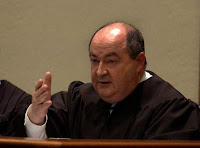
Judge Robert D. Mariani
M.D.Pa.


Judge Mariani noted that, although the initial effort at service by First Class Mail was technically improper under Pennsylvania law, and although the Complaint was not reinstated until after the expiration of the statute of limitations, in the interim, the Plaintiff had made good faith efforts to try to complete service where the Plaintiff had actually tried to complete service in a timely fashion.

The Court also noted that the parties had engaged in active settlement negotiations which demonstrated that the Defendant had adequate notice of the pendency of the litigation.

The court additionally noted that a Plaintiff who incorrectly but genuinely believes that he or she has effectuated service cannot be expected to make continuing service efforts.

Notably, Judge Mariani distinguished between "a plaintiff who attempts service of process, knows it was a failed attempt, and declines to remedy it, and a plaintiff who incorrectly but genuinely believes he has effectuated service and therefore does not make additional attempts.

In light of the above, the court found that the Plaintiff did not intentionally stall the litigation such that dismissal under the law of Lamp v. Heyman was required.

Anyone wishing to review a copy of this decision may click this LINK.  The Court's companion Order can be viewed HERE.


I send thanks to Attorney James M. Beck of the Philadelphia office of the Reed Smith law firm for bringing this case to my attention.


Source of image:  Photo by Nathan Dumlao on www.unsplash.com.

Wednesday, April 27, 2022

Res Ipsa Loquitur Doctrine Applied to Allow Motor Vehicle Incident Case to Proceed


In the case of Houck v. WLX, LLC, No. 3:19-CV-275 (M.D. Pa. March 10, 2022 Mariani, J.), the court denied summary judgment after finding that a Plaintiff had created enough of a record in a circumstantial case as to the justify the application of the res ipsa loquitur doctrine in a case where an item allegedly fell off a Defendant’s truck, bounced, and went through the windshield of the Plaintiff’s decedent’s vehicle with fatal results.

The court noted that, although there were no witnesses, the facts of the case, viewed in a manner most favorable to the Plaintiff as required by the applicable standard of review, established that an item from the Defendant’s truck could have possibly fallen off of the truck, bounced on the roadway, and ended up through the windshield of the decedent.

Anyone wishing to review a copy of this decision may click this LINK.  The Court's Order can be viewed HERE


I send thanks to Attorney James M. Beck of the Philadelphia office of the Reid Smith law firm for bringing this case to my attention.

Wednesday, February 23, 2022

Late Expert Report and Other Issues Addressed in Medical Malpractice Context


In two separate Opinions addressing different pre-trial motions in limine in the case of Morrissey v. GCMC, Geisinger Community Medical Center, No 3:19-CV-894 (M.D. Pa. Jan. 27, 2022 Mariani, J.), the court denied a Motion In Limine in a medical malpractice case and found, in part, that a Defendant could introduce that a Plaintiff refused a particular medical test relative to the treatment provided.

Judge Mariani noted that, where there was a dispute between the parties over whether the test was offered, that issue was one for a jury to decide. The judge went on to note that, if the jury believed the Defendant’s evidence in this regard, then the refusal of the test by the Plaintiff would be undisputedly relevant.

Judge Robert D. Mariani
Pa. M.D.


The court also found that the fact that the Plaintiff allegedly suffered from cirrhosis of the liver from past alcohol use was also relevant and admissible as to causation issues and damages. However, the Defendant was precluded from characterizing the Plaintiff as an alcoholic without first presenting any evidence that the Plaintiff still engaged in the drinking of alcohol.

The court also ruled that the Defendant’s late expert report would not be excluded, Judge Mariani stated that the exclusion of critical evidence is an extreme sanction that it is not to be imposed except for the proponent’s willful deception or flagrant disregard of a court Scheduling Order. While the Defendant’s report was indeed late, the court found that the report at issue was essentially a rebuttal to the report of the Plaintiff’s expert. The court also noted that any prejudice to the Plaintiff was lessened by the fact that the Plaintiff could take the Defendant’s expert’s deposition prior to trial.

Anyone wishing to review a copy of these two decisions may click this LINK and this LINK


I send thanks to Attorney James M. Beck from the Philadelphia office of the Reed Smith law firm for bringing this case to my attention.

Wednesday, December 29, 2021

Judge Robert D. Mariani of Federal Middle District Court Addresses Motion for Remand


In the case of Miller v. State Farm Mut. Auto. Ins. Co., No. 3:21-CV-1433-RDM (M.D. Pa. Dec. 14, 2021 Mariani, J.), the court granted a Plaintiff’s Motion to Remand a UIM breach of contract case back to the Lackawanna County Court of Common Pleas.

In this matter, the Plaintiff had UIM coverage with State Farm in the amount of $25,000.00 per person. In her Complaint, the Plaintiff demanded judgment against State Farm in an amount in excess of $50,000.00 plus interest, costs, and other such relief the court may deem appropriate. 

With her Motion for Remand, the Plaintiff asserted that the amount in controversy did not exceed the federal jurisdiction limit of $75,000.00 and that, as such, the action must be remanded to the state Court of Common Pleas.

Judge Mariani reviewed the removal statute and noted that this statute was required to be strictly construed, with all doubts to be resolved in favor of a remand.

The court additionally noted that the test for determining whether a case involved the requisite federal jurisdictional amount is whether, from the allegations in the pleadings, it is apparent, “to a legal certainty” that the Plaintiff cannot recover the amount claimed, or if, from the proofs, the court is satisfied to a like certainty that the Plaintiff never was entitled to recover that amount. See Op. at 3-4.

Judge Mariani also noted that the United States Supreme Court has long held that Plaintiffs may limit their claims in order to avoid federal subject matter jurisdiction. 

Moreover, where a Plaintiff has not specifically alleged in the Complaint that the amount in controversy is less than the jurisdictional minimum, the case must still be remanded if it appears to a legal certainty that the Plaintiff cannot recover the jurisdictional amount.

The court also noted that, where a Complaint does not limit its request for damages to a precise monetary amount, the District Court must make an independent appraisal of the potential value of the claim.

Judge Robert D. Mariani
M.D.Pa.


Judge Mariani noted that it was alleged in the Complaint that the Plaintiff’s UIM policy provided UIM benefits in the amount of $25,000.00 per person. The court also emphasized that there was no companion claim for bad faith or punitive damages asserted in the Complaint. It was additionally noted that, relative to this Motion for Remand, the Plaintiff conceded that the Defendant’s only exposure was to $25,000.00 UIM policy limits.

The court rejected the defense argument that federal court jurisdiction had been met under the analysis that the tortfeasor had $100,000.00 in liability coverage which required the Plaintiff to prove her damages were in excess of that liability coverage in order to gain access to the UIM benefits, which necessarily placed the amount in controversy above the $75,000.00 jurisdictional requirement.

Judge Mariani stated that there was no case law in support of this argument. The court reiterated that the Plaintiff’s breach of contract recovery was restricted to the $25,000.00 limits set forth in her State Farm policy.

As such, where the court deemed that it appeared to a “legal certainty” that the Plaintiff could not recover the jurisdictional amount necessary to confer subject matter jurisdiction on this federal court, and given that the federal court is required to strictly construe removal statutes with all doubts to be resolved in favor of a remand, the decision was made to remand the case to the Lackawanna County Court of Common Pleas.

In a footnote at the end of his decision, Judge Mariani again emphasized “the importance of the fact that Plaintiff’s Complaint only alleges a claim for underinsured motorist benefits/breach of contract.”  See Op. at p. 7, fn.3. In that same footnote, Judge Mariani stated that, “[i]f Plaintiff had included a claim for bad faith, the Court would find that remand was not appropriate.” Id.

Anyone wishing to review a copy of this decision may click this LINK.

Judge Mariani Remands Another Case Back to State Court

Making a U-Turn Back to State Court

In the case of Blizman v. Travelers Home and Marine Ins. Co., No. 3:21-CV-1546-RDM (M.D. Pa. Dec. 9, 2021 Mariani, J.), the court granted a Plaintiff’s Motion to Remand a breach of contract and bad faith claim back to the state court.

According to the Opinion, the Plaintiff filed a Writ and served it upon the carrier.

Thereafter, the defense attorney entered his appearance on behalf of the carrier.

The Complaint was then filed and sent to the defense lawyer. The Complaint was mailed to the insurance company.

Judge Mariani found that the Complaint had been served and that the timeline for removal was triggered on the date that the defense lawyer was served since the Writ was previously properly served and the defense attorney had previously entered his appearance.

In so ruling, the court reviewed the removal procedure set forth under 28 U.S.C. §1446 and noted that the removal statutes are required to be strictly construed with all doubts to be resolved in favor of a remand where appropriate.

Applying that law to the case before him, Judge Mariani ruled that the case should be remanded.

Anyone wishing to read this decision may click this LINK. The Court's companion Order can be viewed HERE.

Source of image: Photo by Patrick Doyle on Unsplash.

Wednesday, December 2, 2020

Corrected Link to Slip and Fall Case


Yesterday's Tort Talk referenced the case of Urrutia v. Wal-Mart Stores, Inc., No. 3:18-CV-01254 (M.D. Pa. Oct. 27, 2020 Mariani, J.), the court denied the store’s Motion for Summary Judgment in a slip and fall matter. 

Here is the corrected LINK to the case.  I apologize for any confusion.


Friday, January 24, 2020

Skiing Accident Case Survives Summary Judgment


In the case of Kozlowski v. JFBB Ski Areas, Inc., No. 3:18-cv-353 (M.D. Pa. Dec. 12, 2019 Mariani, J.), the court addressed a Motion for Summary Judgment filed on behalf of a Defendant in a case arising out of a skiing accident that occurred at the Big Boulder Ski Resort. The Plaintiff filed a Complaint alleging a claim of negligence and a count in gross negligence/recklessness.

In his Complaint, the Plaintiff alleged that he was skiing at Big Boulder ski resort and, as it came to an intersection of trails, he followed tracks which led to an embankment at the edge of a catwalk. The Plaintiff additionally alleged that, as he skied down the embankment, he suddenly and unexpectedly collided with partially exposed snowmaking pipes which alleged could not be seen from a reasonable safe distance in the area where he was skiing. The Plaintiff alleges injuries as a result.
Before the court was a Motion for Summary Judgment by the Defendant asserting that the Plaintiff’s claims were barred by the Pennsylvania Skier’s Responsibility Act, the common law construing that act, and the release found on Big Boulder’s ski lift ticket.

The court denied the motion on various grounds.

Relative to the defense claim that the Plaintiff’s negligence count was barred by the assumption of risk doctrine as bound under the Skier’s Responsibility Act, the court noted that the Defendant had not established, as a matter of law, that the risk at issue (colliding with hidden snowmaking pipes) is inherent in the sport of downhill skiing.

On the claims of gross negligence and/or recklessness, the court decided that judgment could not be entered on the current record as the case was not entirely free from doubt. As such, the court allowed this issue to go to the jury. 

Relative to the validity of the Release language contained on the Big Boulder lift ticket, the court noted that, since it had ruled that the question of gross negligence and/or recklessness could not be determined that this stayed the proceeding, the validity of the lift ticket release provision, and whether it applied to claims of gross negligence and recklessness, also could not be determined on the current record before the court. 

For these reasons, the court denied the Motion for Summary Judgment filed by the Defendant.

Anyone wishing to review a copy of this decision may click this LINK.

Friday, January 10, 2020

Low But Reasonable Offer Does Not Amount to Bad Faith in UIM Context


In the case of Rau v. Allstate Fire & Cas. Ins. Co., No. 19-1078 (3d Cir. Nov. 27, 2019 Chagares, J., Jordan, J., Restrepo, J.), the Third Circuit Court of Appeals affirmed the entry of summary judgment in favor of the carrier on a bad faith in a case presided over by Federal Middle District Judge Robert D. Mariani at the trial court level. 

In this UIM case, the third party tortfeasor had paid $95,000.00 out of a $100,000.00 liability policy.

The UIM carrier initially made an offer of $10,000.00 to settle the UIM claim. The Plaintiff had demanded the full $200,000.00 UIM policy limits and filed suit when her demand was not met.

During the course of the matter, the carrier increased its offer to $50,000.00. 

The parties agreed to a high/low arbitration with the high parameter being the $200,000.00 policy limits and a low parameter being $10,000.00. The arbitrator found that the total claim was worth $306,345.00 and calculated the carrier’s responsibility under the UIM policy to be $160,786.78.
In its Opinion, the Third Circuit confirmed the rule of law that a “low but reasonable estimate of the insured’s losses” does not amount to per se bad faith. The court additionally noted the rule of law that alleged negligence or bad judgment on the part of a carrier will not support a bad faith claim.

Reviewing the record before it, the Third Circuit found that the trial court had properly found that, based upon the undisputed facts in the record, the carrier has a reasonable basis for contesting the insured’s UIM claim. More specifically, the record revealed that, a large portion of the Plaintiff’s evaluation of her claim was attributable to an alleged potential future surgery. 

It was also noted that an independent medical examination disputed the Plaintiff’s claim that she would need that future surgery.
The record also showed that the Plaintiff had additional health coverage that would defray the cost of the alleged need for future surgery. It was also noted in the Opinion that the carrier believed that the Plaintiff was exaggerating her symptoms during her deposition that was completed in the underlying UIM litigation.

Viewing the record as a whole, the Court of Appeals agreed that the Plaintiff could not demonstrate the absence of a reasonable basis on the part of the carrier to deny the UIM benefits. As such, Judge Mariani's entry of summary judgment for the carrier was upheld.

Anyone wishing to review a copy of this decision may click this LINK.


I send thanks to Attorney Lee Applebaum of the Philadelphia law firm of Fineman Krekstein & Harris for bringing this case to my attention. Please check out Attorney Applebaum’s excellent Pennsylvania and New Jersey Insurance Bad Faith Case Law blog for continuing updates on important bad faith cases.

Thursday, January 2, 2020

Res Ipsa Loquitur Doctrine Could Be Applied Regarding Foreign Object in Food


In the case of Watkins v. Gwaltney of Smithfield, Ltd., No. 3:2016-CV-02049 (M.D. Pa. Nov. 6, 2019 Mariani, J.), the court denied a motion for summary judgment filed by the defense in a case in which the Plaintiff alleges that he sustained fractured teeth and a cut tongue as a result of biting into a hot dog that contained a sharp metal blade.

Of note is that the court ruled that the doctrine of Res ipsa loquitur properly applies to a case involving the alleged presence of a metal knife blade in a hotdog.

The court noted that the Plaintiff testified that he did not do anything that could have introduced the blade into the hot dog. The court found that this adequately excluded other factors and allowed the doctrine Res ipsa loquitor to be applied.

Judge Mariani additionally ruled that the Defendant’s evidence that the Defendant did not use this type of blade in their production of hot dogs served to challenge the Plaintiff’s credibility and was an issue for the jury to decide, as opposed to be grounds for the entry of summary judgment.

On another unrelated issue in this case, the court ruled that, where the Plaintiff sought no discovery in this case, the Plaintiff could not seek discovery sanctions to bar Defendant’s witnesses for non-disclosure of information during the course of discovery.

Anyone wishing to review a copy of this case may click this LINK.

I send thanks to Attorney James M. Beck of the Philadelphia office of Reed Smith law firm for bringing this case to my attention.

Tuesday, November 5, 2019

Dismissal for Lack of Personal Jurisdiction Over Foreign Corporation


In the case of Finarelli v. Monsanto, Co., No. 3:19-CV-178 (M.D. Pa. Sept. 19, 2019 Mariani, J.), the court granted a Motion to Dismiss on jurisdictional grounds under F.R.C.P. 12(b)(2) against one of the Defendants in this matter.    More specifically, the court ruled that the Plaintiff failed to establish personal jurisdiction over the Defendant, which was an advertising company.

The court rejected the argument that jurisdiction was established by the fact that the advertising company helped to plan a nationwide marketing plan. The court noted that this was not enough to create general jurisdiction everywhere in the country.

The court otherwise noted that a Defendant’s involvement in marketing does not create an exceptional case allowing for the exercise of general jurisdiction outside of the states where the Defendant is “at home.”

It was additionally held in this matter that interactive websites do not establish jurisdiction everywhere over a particular Defendant.

Judge Mariani's Opinion provides a thorough analysis of the current status of federal law on the issues of specific jurisdiction and general jurisdiction in federal court matters.

Anyone wishing to review a copy of this decision may click this LINK.  A copy of the Court's companion Order can be viewed HERE.

I send thanks to Attorney James M. Beck of the Philadelphia office of the Reed Smith law firm for bringing this case to my attention.

Tuesday, July 23, 2019

Binding Arbitration Award Less Than Tortfeasor's Limits Collaterally Estops UIM Claim


In the federal Post-Koken case of Shiffer v. Liberty Mutual Fire Ins. Co., No. 3:17-CV-978 (M.D. Pa. July 22, 2019 Mariani, J.), Judge Robert D. Mariani of the Federal Middle District Court of Pennsylvania applied the collateral estoppel doctrine to support the entry of summary judgment in favor of an automobile insurance carrier on a UIM claim where the Plaintiff had previously concluded the third party claim by way of a binding high/low arbitration at which an award was entered below the amount of the tortfeasor's liability limits.

According to the Opinion, during the course of the prior third party litigation, the parties in that matter agreed to proceed to a binding high/low arbitration at which the high parameter was set at the tortfeasor's liability limits. 

In the Binding Arbitration Agreement to relative to the third party claim, the Plaintiff expressly reserved the right to pursue a UIM claim.  The UIM carrier was not a party to that Arbitration Agreement.

As noted, the arbitrator in the third party claim entered an award in favor of the Plaintiff that was less than the tortfeasor's liability limits.

After the Arbitration, the Plaintiff signed a Release requested by the tortfeasor's carrier which confirmed a settlement of the third party liability case in the same amount as the Arbitration Award.

Thereafter, the Plaintiff commenced this UIM Post-Koken lawsuit.  After discovery, the UIM carrier filed a Motion for Summary Judgment asserting the collateral estoppel doctrine and asserted that the Plaintiff was collaterally estopped from pursuing the UIM claim as the matter had been previously fully litigated and the tortfeasor had essentially been determined not to have been underinsured.

The Plaintiff responded with the argument that the criteria for the application of the collateral estoppel doctrine had not been met by the defense.  The Plaintiff additionally asserted that the Court should honor the language in the Arbitration Agreement under which the Plaintiff preserved the right to pursue a UIM claim following the Arbitration.

Judge Robert D. Mariani
M.D. Pa.
After providing a thorough and detailed analysis of the collateral estoppel doctrine in general as well as in this particular context of the impact of a third party award less than the tortfeasor's limits on a UIM claim, the Court granted summary judgment in favor of the carrier on the UIM claim.

The Court found that the Plaintif had been provided with a full and fair opportunity to litigate the claim at the Arbitration and that a final determination had been made at the Arbitration relative to the amount of damages that the Plaintiff was entitled to as a result of the accident.  Given that the Arbitration Award was less than the tortfeasor's liability limits, the Plaintiff was found to be collaterally estopped from pursuing an underinsured motorist claim against the Plaintiff's own automobile insurance policy.

The Court additionally held that the language in the Binding Arbitration Agreement under which the Plaintiff had attempted to preserve the right to pursue a UIM claim did not serve to alter the result.

Anyone wishing to review Judge Mariani's Opinion in Shiffer may click this LINK

The Court's companion Order can be viewed HERE.


For other Tort Talk Blog posts on the effect of the collateral estoppel doctrine in UIM cases, click HERE (be sure to continue scrolling down to additional posts below the long Post-Koken Scorecard post in order to see more write-ups on cases in this context).

Friday, January 11, 2019

Lower But Reasonable Settlement Offers Do Not Constitute Bad Faith in UIM Claims

In the case of Rau v. Allstate Fire & Cas. Ins. Co., No. 3:16-cv-0359 (M.D. Pa. Dec. 6, 2018 Mariani, J.), Judge Robert D. Mariani ruled that a carrier's rejection of a policy limits demand, in and of itself, is not evidence of bad faith absent other evidence of unreasonable and intentional under-evaluation of the claims presented.  

This matter arose out of an alleged UIM bad faith case.   The basic allegations by the Plaintiff were that the carrier failed to provide a reasonable basis for its evaluation of the Plaintiff’s claims and that the carrier failed to negotiate in good faith.  

In its opinion, the court provided a detailed review of the discovery completed on the Plaintiff's medical history along with a review of the treatment of the Plaintiff (or lack thereof) and the medical examinations completed.  The court also analyzed the parties’ negotiations (during which the Plaintiff never wavered from a policy limits demand) and the details of a high/low arbitration that ultimately resulted in the carrier paying less than the policy limits but more than its evaluation.  

Judge Robert D. Mariani
M.D.Pa.
Based upon the record before the court, summary judgment was granted in favor of the carrier.  Judge Mariani found that the carrier came forward with sufficient evidence to establish an absence of any genuine issues of material facts as to its conduct in its dealings with the insured.  

More specifically, the court found that, in evaluating the case, the carrier relied upon expert reports and the absence of any documentation from the Plaintiff showing any surgical history for which more damages might be due.  

The court noted that, while the carrier’s settlement offers were lower than the policy limits demand submitted by the Plaintiff and the eventual arbitration award, this fact, in and of itself, does not support a finding of bad faith.   

To the contrary, the court noted that a low but reasonable evaluation does not constitute bad faith.   The evaluation by the carrier in this case was found to be reasonable based upon the carrier’s investigation and the sum it was willing to pay in setting the high/low arbitration parameters.  

Anyone wishing to review a copy of this decision may click this LINK.

Tuesday, November 20, 2018

Duties of Mental Health Professionals to Protect Others in a School Setting

In the case of Swanger v. Warrior Run School District, No. 4:11-CV-894 (M.D. Pa. Oct. 2, 2018 Mariani, J.), the court addressed the duty of parties to control the conduct of third party to protect others from harm.  The case arose out of alleged inappropriate touching between two mentally challenged students in a school setting.

Judge Mariani stated that, as a general matter of law, persons have no duty to control the conduct of third parties to protect another from harm.  An exception exists for mental health professionals who know, or should know, that a patient poses an immediate threat of serious harm to a specific intended victim.   The court otherwise noted that the law does not impose any generalized duty upon mental health professionals to warn unspecified classes of person with whom patients might interact.  

In this matter, the court found that the Plaintiff did not have a claim against the Defendant mental health providers because the patient at issue made no reference during his treatment to the Plaintiffs as a specifically identified potential victim.  

As such, summary judgment was granted in part and denied in part in this matter. 

Anyone wishing to review of a copy of this decision may click this LINK.  The companion Order can be viewed HERE.

I send thanks to Attorney James M. Beck of the Philadelphia office of the Reed Smith law firm from bringing this case to my attention.


Thursday, August 30, 2018

Judge Mariani of Federal Middle District Court Reviews Law of Personal Jurisdiction in Federal Court


In the case of Burnside v. Peterbilt Motors Co., 3:17-CV-2121 (M.D. Pa. June 28, 2018 Mariani, J.), the court granted a Defendant’s Motion to Dismiss based upon jurisdictional objections.  

This products liability claim arose out of an incident during which the Plaintiff was injured when a bobtail truck he was using began leaking propane and then caught fire.

Judge Mariani provided a detailed review of the current standards for properly finding jurisdiction over a foreign defendant in a Pennsylvania federal court matter.

In this matter, the court stated that the Plaintiffs did not allege that the Defendant directed any activities to Pennsylvania or sent the product at issue to Pennsylvania.  The court also noted that the Plaintiff did not even allege how the product came to be in Pennsylvania.  

The court ruled that a Plaintiff cannot establish personal jurisdiction over a Defendant through the stream of commerce theory under the facts of this case.  

As such, the court granted the Defendant’s Motion to Dismiss but allowed the Plaintiff to conduct limited jurisdictional discovery before the case was completely dismissed.

Anyone wishing to review a copy of this decision may click this LINK.  The Court's companion Order can be viewed HERE.

I send thanks to Attorney James M. Beck of the Reeds Smith law firm in Philadelphia for bringing this case to my attention.  


Tuesday, July 24, 2018

Summary Judgment Granted in Part and Denied in Part Under Tincher Analysis


In the case of Mercurio v. Louisville Ladder, Inc., No. 3:16-CV-412 (M.D. Pa. May 31, 2018 Mariani, J.), the court granted summary judgment in part and denied it in part in a design defect products liability case. 

The case arose out of a Plaintiff's fall from a ladder.

In this decision, the court noted that the admissibility of the Plaintiff’s design defect expert required a Daubert hearing on the Defendant's Motion in Limine seeking to preclude the Plaintiff's expert from testifying. 

The court additionally found that there was no basis for the Plaintiff’s expert’s opinion that the warnings on the product at issue were defective.  The court noted that the expert’s opinion in this regard was a spur of the moment comment during depositions.    The court additionally found that the Plaintiff’s expert was not qualified to evaluate the warnings at issue.  

Judge Robert D. Mariani
M.D. Pa.
Judge Mariani also concluded that, under the new post-Tincher law, compliance with industry standards by the defense is evidence that a jury may consider as relevant to a product’s risk/utility defect test.  

The court also reaffirmed that the Azzarello case was overruled by the Tincher decision.  

Judge Mariani also confirmed that, under the current status of Pennsylvania products liability law, there is no longer a bright line between negligence and strict liability theories in a given case.  

In the end, the court denied the Defendant's Motion for Summary Judgment relative to the design defect and breach of implied warranty claims.  However, the court did grant the Defendant summary judgment on the claims of a manufacturing defect, inadequate warning, and breach of express warranty.

Anyone wishing to review a copy of this decision may click this LINK.  Here is a LINK to the companion Order entered in the case.

I send thanks for Attorney James M. Beck of the Reed Smith Law Firm in Philadelphia, Pennsylvania for bringing this case to my attention.  

Monday, March 19, 2018

Federal Court Addresses Standards for Jurisdiction Over Out-of-State Defendant

In the case of Wylam v. Trader Joe’s Co., No. 3:16 - CV - 2112 (M.D. Pa. Jan. 18, 2018 Mariani, J.), a Pennsylvania Federal Court denied a Motion to Dismiss without prejudice in this matter involving a question of proper general personal jurisdiction over an out-of-state Defendant.  

The Court ruled that there is no general jurisdiction over the moving third party Defendant in this matter.   Rather, that Defendant was noted to be a foreign  company with a principle place of business abroad.   No minimal contacts within Pennsylvania were seen in the record.   More specifically, the Opinion noted that the Defendant did not have any physical presence in the Commonwealth of Pennsylvania. 

Judge Robert D. Mariani
M.D. Pa.
Judge Robert D. Mariani noted that the Plaintiff was attempting to rely upon a stream of commerce personal jurisdiction argument.  The Court noted that this argument has never been approved by the Pennsylvania Supreme Court, while not being decisively rejected either.  

However, the court in Wylam ruled that a single in-state sale, without some additional conduct directed towards the forum state, did not support the Plaintiff's stream of commerce jurisdiction argument.  

The Court also noted that the fact that a Defendant’s products are carried by national retailers is also insufficient to establish jurisdiction in any state.  

The court also generally noted that it is the burden of the Plaintiff to establish jurisdiction and that speculation in this regard is not sufficient.  

As stated, the court denied the Motion to Dismiss without prejudice.   However, the Plaintiff was allowed to complete jurisdictional discovery, limited to the stream of commerce issue in an effort to gather further support for the jurisdictional arguments.  

Anyone wishing to review a copy of this decision may click this LINK.  The companion Order can be viewed HERE.

I send thanks to Attorney James M. Beck of the Philadelphia office of the law firm of Reed Smith for bringing this case to my attention. 

Friday, January 12, 2018

Plaintiff's Motion to Remand Post-Koken Claim Back To State Court Denied


In his recent decision in the case of Hagan v. Leon, No. 3:17-cv-2155 (M.D. Pa. Jan. 3, 2018 Mariani, J.) (Mem. Op. Judge Robert D. Mariani of the Federal Middle District Court of Pennsylvania), the court denied a Plaintiff’s Motion to Remand his post-Koken claims back to the state court.  

Judge Robert D. Mariani
M.D. Pa.
In this matter, the Plaintiff sued the alleged third party tortfeasor Defendants on a negligence claim and his own carrier, Progressive, for underinsured motorist benefits.

The Plaintiff had previously released the tortfeasor Defendants in exchange for a payment of $15,000.00 along with an agreement to refuse any consent to removal that may be sought if the UIM carrier attempted to remove the case to federal court.  

Thereafter, Progressive filed a Notice of Removal to which the Plaintiff responded with a Motion to Remand.   The Plaintiffs asserted that the Notice of Removal failed to allege citizenship of all parties at the time the Complaint was filed and further asserted that not all Defendants had consented to the removal as required by the removal statute.  

On the same day that the Plaintiffs’ Motion to Remand was filed, Progressive amended its Notice of Removal to include allegations of the citizenship of all of the parties at the time the Complaint was filed.  

After reviewing the matter, the court found that both of the Plaintiffs’ arguments lacked merit and, therefore, denied the Plaintiff’s Motion to Remand.  

Judge Mariani more specifically noted that Progressive’s Amended Notice of Removal clearly stated that, at the time the Plaintiffs’ Complaint was filed, the Plaintiffs were citizens of Pennsylvania and the tortfeasor Defendants were citizens of New Jersey and the UIM carrier Defendant was a citizen of Ohio.   Accordingly, the court found that, even if Progressive’s original Notice of Removal was deficient, the defect was cured by the amendment.

Turning to the Plaintiffs’ second argument, the court reviewed the procedure for removing a civil case to federal court under 28 U.S.C. §1446.  The court noted that this code provision has been construed to require that, when there is more than one (1) Defendant, all must join in the removal petition.   However, the court noted a recognized  exception that provided that the unanimity rule may be disregard where (1) a non-joining party is an unknown or nominal party; or (2) where a defendant has been fraudulently joined.  

The court noted that nominal parties are generally those  parties without any real interest in the litigation.

Here, the court noted that the tortfeasor Defendants had been released from the matter by way of a settlement agreement.  Accordingly, the court found that the tortfeasors had no real remaining interest in the litigation and, therefore, were, consequently, nominal parties from whom consent was no longer required to support a removal of a state court litigation to federal court.  

In so ruling, Judge Mariani stated that it did not appear that the Third Circuit Court of Appeals had ever considered a similar fact pattern prior to this decision.  However, the court noted that similar rulings have been issued by the Fifth Circuit Court of Appeals and the Eighth Circuit Court of Appeals granting remands under analogous facts.   As such, the Plaintiff’s Motion to Remand was denied.  
 

Anyone wishing to review a copy of this decision may click this  LINK.


Tuesday, December 19, 2017

No Duty Owed For Inherent Risks Associated With Downhill Skiing


In the case of Cole v. Camelback Mountain Ski Resort, No. 3:16-CV-1959 (M.D. Pa. Oct. 16, 2017 Mariani, J.), the court granted a Motion to Dismiss in a downhill skiing injury case.  

In so ruling, Judge Mariani noted that a ski resort owes no duty of care to a skier for any in inherent risk of downhill skiing.  The court noted that accidentally striking an object while skiing down a slope is an inherent of downhill skiing.   The exact nature of the objects struck is not material.  

The court also noted that the fact that the ski resort added padding to the object that the Plaintiff struck did not give rise to liability for a negligent undertaking.   To rule otherwise would deter voluntary safety efforts on the part of a ski resort.

Anyone wishing to review a copy of this decision may click HERE.

 I send thanks to Attorney James M. Beck of the Philadelphia office of Reed Smith and the writer of the Drug and Device Law blog for bringing this case to my attention.