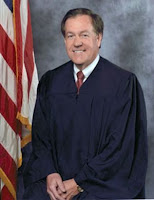
In the case of the post-Koken case of
Wagner v. Allstate Ins. Co.,
No. 5:14-cv-07326 (E.D. Pa. Jan. 19, 2016 Leeson, J.), Judge Joseph Leeson of
the Federal Eastern District Court of Pennsylvania refused the UIM carrier’s
effort to stay the Plaintiff’s bad faith claim but, in the end, rejected most
of the insured’s bad faith discovery requests.
According to the Opinion, the UIM carrier’s primary argument
in favor of its request for a stay on bad faith discovery was that, to allow
such bad faith discovery would require the UIM carrier to give up protection
for work product that it prepared in anticipation of litigating the underlying
breach of contract UIM claim.
The court
rejected this argument and asserted that a “mere claim of bad faith is not
shattered the work-product privilege.”
Overall, the court found that a stay of bad faith discovery
is not required to eliminate any prejudice or to promote economy.
The court observed the different terms in
granted or denying stays of bad faith discovery in Pennsylvania’s state in
federal courts but attributed this split in authority, in part, to the fact that bad
faith is tried by a judge in the state court but by a jury in the federal
courts.
In reviewing the bad faith discovery issues as applied to
work-product issues, the court found that an insurance company could not
reasonably argue that the entirety of its claims file materials are accumulated in
anticipation of litigation.
However,
the court also stated that this did not mean that the work-product doctrine was
wholly in applicable to insurers’ claims files.
The court stated that, at some point in its
investigation, an insurance company’s activity shifts from mere claims
evaluation to an anticipation of litigation.
Accordingly, the court rejected the Plaintiff’s assertion
that all of the insurers’ claims and investigation files were created in the
ordinary course of business.
Rather, the
court in
Wagner found that “[w]hether Plaintiffs may be entitled to a subset of that
information would hinge upon a fact-specific inquiry into the nature of the
information that they seek, when [the insurer] reasonably anticipate
litigation, Plaintiffs’ need for the particular information, and whether they
can obtain the information through other means.”
The court further noted that this inquiry requires very
specific arguments and typically the need for an in-camera review of the
documents by the court.
Here, the
Plaintiffs were found to have made no such arguments as it was the Plaintiff’s
primary position that there was no work-product privilege.
Accordingly, the Motion was denied, but
without prejudice.
Judge Leeson did go on to determine the date when the
insured was deemed to have reasonably anticipated litigation.
The court found that that date occurred
after the insured’s first demand for the policy limits because the carrier had
asked for certain information to be able to evaluate the claim and the
demand.
The court found that it was
only after receiving that information that litigation could have reasonably
been anticipated.
The court also noted that, even materials prepared after
litigation was reasonably anticipated by the carrier might turn out to be
discoverable if exceptions to the work-privilege could be established by the
Plaintiff.
In other words, if the
Plaintiffs were able to show that they have a substantial need for the
particular materials and cannot, without undue hardship, obtain those materials
or their substantial equivalent by other means, Plaintiffs may be permitted to
obtain the discovery they seek, provided that the discovery did not include
mental impressions, conclusions, opinions, or legal theories of the carrier,
its attorneys, or other representatives.
Anyone wishing to read the Wagner v. Allstate case online may click this LINK.
Source: Pennsylvania
and New Jersey Insurance Bad Faith Case Law Block (March 15, 2016) at www.pabadfaithlaw.com