Showing posts with label Open and Obvious Danger. Show all posts

Wednesday, April 15, 2026

Watch Out For That Hole That is Open and Obvious


In the case of Harris v. Hutchinson Sportsman’s Club, No. 1007 WDA 2025 (Pa. Super. Feb. 4, 2026 Stabile, J., Murray, J., and Beck, J.) (Op. by Murray, J.), the Superior Court affirmed the trial court’s entry of summary judgment under the open and obvious doctrine in a case involving a Plaintiff who crashed his bike on a road owned by the Defendant.

According to the Opinion, the Plaintiff testified that he noticed a “giant hole” in the road and attempted to avoid it as he was operating his son’s electric bike.

The Defendant moved for summary judgment, arguing that the Plaintiff was aware of the road conditions and that they were open and obvious.

The Superior Court agreed with the trial court’s finding that the Plaintiff had failed to establish a case of negligence. The appellate court noted that the trial court had properly found that the conditions on the road were open and obvious, and that the Plaintiff was aware of the conditions, thereby negating any duty on the part of the landowner to warn or protect the Plaintiff.

The Superior Court also agreed with the trial court that the Plaintiff’s inability to pinpoint the cause of his bike accident with his testimony further undermined the Plaintiff’s negligence claim.

As such, the Superior Court upheld the entry of summary judgment, finding that the Plaintiff did not meet his burden of proof on his negligence claim.

Anyone wishing to review a copy of this decision may click this LINK.


Source: The Legal Intelligencer State Appellate Case Alert (Feb. 24, 2026).


Source of image:  Photo by KBO Bike on www.unsplash.com.

Tuesday, November 18, 2025

Court Denies Motion For Summary Judgment in Store Trip and Fall Case

In the case of Vargas v. Wal-Mart Supercenter, No. 3:22-CV-01642 (M.D. Pa. Oct. 7, 2025 Latella, Mag. J.), the court denied a Defendant’s Motion for Summary Judgment in a premises liability case. 

The Defendant was attempting to rely upon surveillance videotape evidence that showed the Plaintiff's actions at the time of the incident.  The Defendant also asserted that the video confirmed that the condition that the Plaintiff encountered was open and obvious.

Federal Mag. Judge Leo Latella


Federal Middle District Court Magistrate Judge Leo Latella ruled that the Defendant’s surveillance videotape evidence did not reach the level of an irrefutable physical fact that could support summary judgment in this slip and fall matter.  

With regards to the Defendant’s argument that the interpretation of the video established the assumption of the risk defense as a matter of law, the court noted that it was for the jury to decide whether the Plaintiff’s account of the events leading to the fall down event was believable.  


The court additionally noted that the Defendant should have taken customer distraction into account in maintaining safety on the premises. 


Anyone wishing to review a copy of this decision may click this LINK.


I send thanks to Attorney James M. Beck of the Philadelphia office of the Reed Smith law firm for bringing this case to my attention.  


Friday, October 31, 2025

Court Rules that Winter Conditions in Parking Lot Were Open and Obvious To Slip and Fall Plaintiff


In the case of Hinton-Hardison v. Kohl’s, Inc., No. 2022-SU-003063 (C.P. York Co. Sept. 22, 2025 Menges, J.), the court granted a Defendant’s Motion for Summary Judgment in a slip and fall case. According to the Opinion, the incident occurred at a Kohl’s department store. Kohl’s had contracted with a snow removal contractor to take care of the property. That snow removal contractor subcontracted the work to a different snow removal contractor.

The subcontractor snow removal company filed the Motion for Summary Judgment. The Defendant asserted that the Plaintiff’s claims were barred by the Plaintiff’s assumption of the risk.

The court agreed.

The court noted that the condition of the ice and/or snow at issue in this case was the type that would be apparent to and recognized by a reasonable person, exercising normal perception, intelligence, and judgment. The court noted that its determination that reasonable minds on a jury could not differ as to the conclusion that the conditions in the parking lot presented as an obvious condition.

As such, the court felt “constrained” to grant the snow removal contractor’s Motion for Summary Judgment.

Anyone wishing to review a copy of this decision may click this LINK.

I send thanks to Attorney Jennifer P. Carter of the York, PA law firm of Griffith, Lerman, Lutz & Scheib for bringing this case to my attention.

Thursday, May 22, 2025

New Trial Ordered Based on Application of Open and Obvious Doctrine in Premises Liability Case


In the case of Janik v. Zoological Society of Philadelphia, No. 1590 EDA 2024 (Pa. Super. April 22, 2025 Panella, P.J.E., Lane, J., and Stevens, P.J.E.) (Op. by Panella, P.J.E.), the Pennsylvania Superior Court ruled that the trial court correctly granted a new trial after recognizing its error in failing to instruct the jury on the open and obvious doctrine where the trial evidence created a genuine issue of material fact as to whether a reasonable person would have recognized an architectural feature as a potential hazard.

According to the Opinion, the Plaintiff was walking in the Philadelphia Zoo’s Big Cat Falls exhibit when his left foot struck the bottom of a decorative boulder, which allegedly caused him to fall and sustain injuries.

The Plaintiff filed suit alleging that the Zoo was negligent in placing the decorative boulder adjacent to the walkway because it created a dangerous or defective condition.

The Defendant’s pre-trial Motion for Summary Judgment asserting that the boulder was an open and obvious condition was denied. At trial, the trial court denied the Zoo’s Motion for a nonsuit on the same grounds. The jury then returned a verdict in favor of the Plaintiff.

On appeal, the Zoo asserted that the trial court erred in denying the Motion for Summary Judgment and denying the Motion for a Nonsuit, and in excluding jury instructions on the open and obvious doctrine. Other issues were also raised in the post-trial motions.

In its post-trial Opinion, the trial court felt that a new trial should be granted given its own errors, in part, in failing to admit certain evidence and in failing to instruct the jury on the open and obvious doctrine.

Relative to the issue of the open and obvious doctrine, the Superior Court agreed that there were issues of fact presented at trial that should have compelled the trial court to instruct the jury on that doctrine.

Anyone wishing to review a copy of this decision may click this LINK.


Source: The Legal Intelligencer State Appellate Case Alert, www.Law.com (May 6, 2025).

Monday, April 14, 2025

Court Rejects Summary Judgment For Open and Obvious Condition in Trip and Fall Case


In the case of Knepp v. Wal-Mart Stores East, L.P., No. 3:22-CV-144 (W.D. Pa. Feb. 28, 2025 Fischer, J.), the court denied a Motion for Summary Judgment in a case in which the Defendant relied upon the open and obvious doctrine relative to a trip and fall incident.

According to the Opinion, this matter arose out of an incident during which the Plaintiff tripped over a pallet corner that was protruding out from a watermelon display.  The Plaintiff offered a liability expert who offered an opinion that the store's placement of the watermelon display in a store aisle with the corner of the pallet protruding out violated OSHA standards to keep walkways clear.  The expert also opined that the display created a tripping hazard for customers and employees alike.   

In denying the summary judgment motion, the court ruled that, even assuming that the condition that caused the Plaintiff to trip was open and obvious, summary judgment was denied in this case where a jury could decide that the Defendant was negligent because the Defendant had reason to expect that a business invitee could be distracted, could fail to discover, and/or could fail to remember what was obvious and, could thereby fail to protect himself or herself.

Anyone wishing to review a copy of this decision may click this LINK.


I send thanks to Attorney James M. Beck of the Reed Smith office in Philadelphia for bringing this case to my attention.


Source of image:  Photo by Bo Cho on www.pexels.com.

Thursday, October 3, 2024

Summary Judgment Granted Based on Open and Obvious Doctrine Regarding Accident Involving Pothole


In the case of Holmes v. 746 Union Development, LLC, No. 2021-C-1461 (C.P. Leh. Co. Sept. _ 2023 Cohen, J.), the various Defendants filed a Motion for Summary Judgment after the Plaintiff fell from her electronic personal mobility device/scooter when she hit a pothole while attempting to cross a street in Allentown.

The court granted the Defendant’s Motion filed by the Defendant City.  In his decision in this matter
Judge Zachary J. Cohen
Lehigh County


Judge Zachary J. Cohen of the Lehigh County Court of Common Pleas held that the Plaintiff could not recover as a matter of law where she admitted in her deposition testimony that she was not watching where she was going as she attempted to cross the street in her mobility scooter.

The court additionally noted that the record revealed that, if the Plaintiff had been watching where she was going, she would have seen and avoided the obvious pothole in the road.

Anyone wishing to review a copy of this decision may click this LINK.


Source: “The Legal Intelligencer Weekly Case Alert” www.Law.com (Aug. 29, 2024).

Wednesday, August 28, 2024

Summary Judgment Granted in Parking Lot Case Based on Open and Obvious Doctrine


In the case of Ersick v. Joe’s Store, No. 3082-CV-2022 (C.P. Westmoreland Co. July 25, 2024 Smail, J.), the court addressed issues in a premises liability case.

According to the Opinion, this matter involved a trip and fall in the parking lot of a store. The Plaintiff allegedly fell over a black and yellow parking block that she allegedly could not see because her view was obscured by the truck from which she exited in a parking spot immediately before she fell.

The defense filed a Motion for Summary Judgment arguing that, first, the Plaintiff failed to present evidence to identify what caused her to fall and, secondly, that the parking blocks at issue were known by the Plaintiff or were otherwise open and obvious. 

The Plaintiff countered with an argument that the evidence revealed that her fall was caused by a defective parking block and that the question of a dangerous condition should be lift to a jury.

Reviewing then record before it, the court found that the Plaintiff did indeed identify which parking block allegedly caused her to fall.

However, the court agreed with the defense that the parking block at issue was an open and obvious condition that the Plaintiff admittedly observed prior to her fall down event. It was additionally indicated that the incident occurred during daylight conditions, that the Plaintiff had previously visited the store during the day, that the Plaintiff recalled attempting to step over the block, and that the Plaintiff was able to recall that the parking block had yellow or orange stripes on it.

As such, the court granted summary judgment to the defense after finding that the condition which allegedly caused the Plaintiff to fall was an open and obvious condition.

Anyone wishing to review a copy of this decision may click this LINK.


I send thanks to Attorney Thomas W. Summers of the Pittsburgh office of the Summers McDonnell Hudock, Guthrie & Rauch, P.C. law firm.


Tuesday, July 23, 2024

Issues of Fact On Whether Condition That Caused Slip and Fall Was Open and Obvious Results in Reversal of Entry of Summary Judgment


In its Non-Precedential decision of Robinson v. Seven Springs Mountain Resort, No. 313 WDA 2023 (Pa. Super. June 12, 2024 Bowes, J, Kunselman, J., and Murray, J.) (Op. by Bowes, J.), the Pennsylvania Superior Court reversed the trial court’s entry of summary judgment in a trip and fall matter.

According to the Opinion, the Plaintiff was involved in playing a disc golf (golf with a frisbee) at the time of the incident.  She slipped and fell on a steep slope that had gravel on it and sustained a fractured ankle.

The trial court granted summary judgment after noting that the natural condition at issue was known and obvious since the Plaintiff knew she was walking down a steep slope with patches of rocky and loose dirt when she fell.  The trial court had ruled that the defendant landowner did not owe any duty to protect the Plaintiff from the natural conditions of the terrain that led to the Plaintiff's fall.

On appeal, the Pennsylvania Superior Court ruled that there were issus of fact as to whether the conditions at issue were open and obvious.  

The Court also noted that, even if the condition on the Defendant’s playing field that cause the Plaintiff’s fall was an open and obvious condition, the Defendant was not relieved of its duty of care when it had reason to expect that the invitee’s attention might be distracted.  Here, the appellate court noted that the Plaintiff's attention could have been distracted while playing disc golf.

Anyone wishing to review a copy of this decision may click this LINK.

I send thanks to Attorney James M. Beck of the Philadelphia office of the Reed Smith law firm for bringing this case to my attention.

Source of image:  Photo by Priscilla Du Preez on www.pexels.com.

Wednesday, February 21, 2024

Summary Judgment Denied In Supermarket Slip and Fall That Occurred in Checkout Aisle


In the case of Scillia v. The Golub Corporation, No. 3772-CV-2022 (C.P. Monroe Co. Jan. 18, 2024 Williamson, J.), the court denied a Motion for Summary Judgment in a supermarket slip and fall case.

According to the Opinion, the Plaintiff’s incident occurred in a narrow pathway between checkout registers where the Plaintiff allegedly slipped and fell as a result of a liquid on the floor.

The Defendants filed a Motion for Summary Judgment arguing that the Plaintiffs failed to meet their burden of proving negligence in terms of actual or constructive notice of the condition, and/or under an argument that the doctrine of an open and obvious condition defeated the Plaintiff’s case.

The court denied the Motion for Summary Judgment after finding that issues of fact existed with respect to both arguments presented by the defense.

The court emphasized that the incident occurred directly in a check-out aisle that was being manned at all times by a cashier. The court distinguished this case from other grocery store slip and fall cases in other parts of of supermarket stores based upon, in part, upon the fact that the incident occurred in a narrow area where customers are required to walk and which area was directly in front of a cashier employee.

The court also noted that there were sets of cart tires on the floor in the area of the liquid puddle, which would tend to possibly show that the puddle was there for a longer period of time such that a jury could find that the puddle arguably could have been noticed by store employees before the Plaintiff encountered it.

With regards to the arguments made by the defense under the open and obvious doctrine, the court again found that there were also issues of fact on that question that should be left to be decided by a jury.

Anyone wishing to review a copy of this decision may click this LINK.

Source of image:  Photo by Shvets on www.pexels.com.

Wednesday, February 7, 2024

Plaintiff's Trip and Fall Over Pallet of Products in Store Barred By Open and Obvious Doctrine


In the case of Ziadeh v. Wal-Mart, Inc., No. 1:22-CV-00094 (M.D. Pa. Jan. 2, 2024 Wilson, J.), the Middle District Court granted summary judgment to a store in a trip and fall case.

According to the Opinion, the Plaintiff allegedly tripped over a pallet with supplies on it that was located within an aisle of the store.    

The court ruled that the object that the Plaintiff tripped over was sufficiently large and visible as to be considered to be open and obvious. As such, the court found that the Defendant did not owe the Plaintiff any duty under the open and obvious doctrine.

The court also found that the Plaintiff’s speculation about another similar object possibly being involved in the incident, the presence of which was not supported by any evidence, was insufficient to prevent the entry of summary judgment.

The court ruled that the question of whether a condition is open and obvious is an objective analysis, and one that does not require any subjective apprehension of danger by the Plaintiff.

In this case, the court found that the Defendant was entitled to rely upon the assumption that a Plaintiff would employ ordinary care to protect herself from obvious harm.

Anyone wishing to review a copy of this decision may click this LINK.


I send thanks to Attorney James M. Beck of the Reed Smith law firm in Philadelphia for bringing this case to my attention.

Source of image:  Photo by Justus Menke on www.unsplash.com.

Tuesday, January 16, 2024

Watch Your Step -- Step Down from Raised Restaurant Table Ruled an Open and Obvious Condition -- Summary Judgment Granted


In the case of O’Meara v. Texas Roadhouse, No. C-0048-CV-2022-752 (C.P. North. Co. Dec. 21, 2023 Sletvold, J.), the court granted a Motion for Summary Judgment filed by Texas Roadhouse in a slip and fall case.

The Plaintiff alleged that she was caused to slip and fall at the restaurant as she was stepping away from her table which was up on a raised floor.

After reviewing the record before the court, which included confirmation that the Plaintiff had, minutes before her fall, observed the step in question, ascended into the booth, and then noticed a warning sign on the table about the raised area. The court also noted that, during her deposition, the Plaintiff admitted that, if she had looked down as she was leaving the booth, she would have noticed the step.

Applying the law on premises liability in Pennsylvania, the court ruled that the unobscured raised threshold to the table was an open and obvious condition and that a reasonably diligent invitee would have noticed the same. As such, the court found that the Defendant owed no duty to the Plaintiff with respect to this open and obvious condition. Accordingly, summary judgment was granted in favor of the Defendant.

Anyone wishing to review a copy of this decision may click this LINK.


I send thanks to Attorney Jennifer G. Shorr of the Philadelphia office of Weber Gallagher for bringing this case to my attention.

Source of Image:  Texas Roadhouse Facebook Page.

Thursday, September 21, 2023

Summary Judgment Denied in Slip and Fall Case After Plaintiff Produced Expert Report Asserting that Floor Mat Was Dangerous


In the case of Perry v. Sam’s East, Inc., No. 1:21-CV-00301-SPB (W.D. Pa. Aug. 17, 2022 Baxter, J.), the court denied a Defendant store’s Motion for Summary Judgment in a slip and fall case after finding that genuine issues of material fact existed regarding whether the danger was known and obvious to the Plaintiff,  The court found that this question remained to be decided by the jury.

In this case, the Plaintiff alleged that the store was negligent for not having a slip resistant mat on the floor in a pedestrian walkway. The Plaintiff produced expert evidence in support of the claims presented.

The Plaintiff’s expert concluded that the Plaintiff fell as a result of an allegedly dangerous unsecured, loose mat in a foreseeable pedestrian walkway.

The court found that there is genuine issues of material fact to be decided by the jury. As such, the Motion for Summary Judgment is denied.

Anyone wishing to review a copy of this decision may click this LINK.

Source: Article - “Court Rejects Sam’s Club’s Motion to Nix Slip-and-Fall Case, Citing Questions of Whether Danger was ‘Known and Obvious,” By Riley Brennan of the Pennsylvania Law Weekly (Aug. 21, 2023).


HAVE A PREMISES LIABILITY CASE 
YOU WANT TO BRING TO A CLOSE 
BEFORE THE END OF THE YEAR?


DanCummins@CumminsLaw.net
570-319-5899

Thursday, July 27, 2023

Court Finds Jury Issues With Respect to Defense of Open and Obvious Danger


In the case of Irwin v. Neshannock Woods, Inc., No. 10457 of 2022 (C.P. Lawr. Co. May 15, 2023 Motto, P.J.), the court denied a Defendant’s Motion for Summary Judgment in a slip and fall case that occurred at an apartment complex.

In this case, the Plaintiff sued her landlord and the landlord property maintenance company after the Plaintiff allegedly sustained injuries from a slip and fall caused by a snow mound near a dumpster on the property.

In their Motion for Summary Judgment, the Defendants asserted that Plaintiff’s claim of negligence was legally insufficient because the snow mound was an open and obvious condition. 

The Defendants also asserted that the Plaintiff voluntarily assumed a risk by choosing to walk over the mound to dispose of her trash. The landlord additionally asserted that the Plaintiff failed to inform the landlord about an issue with the snow mound before the Plaintiff’s fall.

The court denied the Motion for Summary Judgment after finding that genuine issues of material fact remain to be decided by a jury.

The court otherwise noted that the Defendants had a duty to protect the Plaintiffs from the known and obvious hazard created by the snow mound and that the Defendants could have taken steps to prevent the alleged injuries.

The court additionally considered the fact that the landlord had a policy requiring residents to use the dumpster and the fact that the landlord had made a prior request to have the snow mound removed, which was not accomplished.

Anyone wishing to review a copy of this decision may click this LINK.


Source: “Digest of Recent Opinions.” Pennsylvania Law Weekly (June 20, 2023).

Wednesday, July 5, 2023

Walking Over a Snow Covered Grassy Area is Deemed the Taking of an Open and Obvious Risk as a Matter of Law


In the case of Hinerman v. Westmoreland County Airport Auth., No. 732 C.D. 2022 (Pa. Cmwlth. June 15, 2023 Ceisler, J., Covey, J., and Leavitt, J.) (Op. by Ceisler, J.), the Pennsylvania Commonwealth Court affirmed the entry of summary judgment in a slip and fall case.

In this matter, the Plaintiff, instead of using a paved walkway or the driveway, both of which were cleared, chose to instead walk across a snow covered grassy area where the Plaintiff then fell.  The Plaintiff thereafter brought suit against the Defendant.

The court ruled than snowy area that the Plaintiff chose to walk over was an open and obvious danger. The court noted that the uncertainties inherent in walking on snow covered ground are obvious as a matter of law. The Court found that, by taking a short cut across the snow covered ground, the Plaintiff accepted the risk that the underlying ground would be less suitable for walking.

The court reiterated the general rule that landowners do not have a duty to remove any and all dangers from any and all parts of their premises involving winter conditions.

As stated, the trial court's entry of summary judgment was affirmed.    

Anyone wishing to review a copy of this decision may click this LINK.


I send thanks to Attorney James M. Beck of the Philadelphia office of the Reed Smith law firm for bringing this case to my attention.

Source of image:  Photo by Eberhard Grossgasteiger on www.unsplash.com.

Thursday, February 9, 2023

Issue of an Alleged Open and Obvious Danger in a Premises Liability Case Allowed to Proceed to Jury

In the case of Pusateri v. Wal-Mart East, LP, No. 21-1137 (W.D. Pa. Dec. 20, 2022 Kelly, M.J.), the court denied a Defendant store’s Motion for Summary Judgment in a trip and fall case.

According to the Opinion, the Plaintiff was shopping in a Wal-Mart store during which the Plaintiff walked four (4) times passed a partially empty black pallet that held large screen televisions. The Plaintiff alleged that she did not remember the presence of the pallet during each pass, but conceded that nothing blocked her view of the pallet.

After her fourth pass, a store employee entered the aisle with a top stock shopping cart that was loaded.

In order to avoid the stock cart and permit it to pass, the Plaintiff backed up and tripped on the base of the protruding pallet that was behind her. The Plaintiff alleged injuries as a result.

The Federal Magistrate Judge that decided this case noted that, while a store owner owes no duty to invitees for an obvious danger that is avoidable by the exercise of ordinary care, the court found that the issue of whether the hazard in question was open and obvious is a question for the jury. In this case, the court also noted that the Plaintiff may have been distracted by the Defendant employee’s actions.

Given the issues of fact presented, the court denied the Motion for Summary Judgment.

Anyone wishing to review a copy of this decision may click this LINK.


I send thanks to Attorney James M. Beck of the Philadelphia office of the Reed Smith law firm for bringing this case to my attention.

Tuesday, September 6, 2022

Court Finds That Plaintiff's Claims Are Barred By Open and Obvious Doctrine

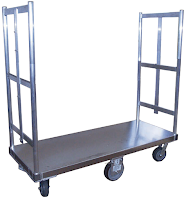
A U-Boat


In the case of Doundas v. Redner’s Market, Inc., No. 2020-CV-1747 (C.P. Leh. Co. May 9, 2022 Pavlack, J.), the court entered summary judgment in favor of a Defendant supermarket after finding the Defendant was not liable for the alleged personal injuries suffered by a Plaintiff while a business invitee in the Defendant’s store given that the condition involved was allegedly open and obvious and would be recognized by a reasonable person in the position of the Plaintiff, exercising normal perception, intelligence and judgment.

According to the Opinion, while the Plaintiff was in the Defendant supermarket, there was a “u-boat,” that is, a cart used to stock shelves, positioned in close proximity to the refrigerators in the dairy aisle.

According to the Plaintiff, when she took a step to get between the u-boat and the refrigerator door to get an item, her foot got caught under the u-boat, causing her to fall to the ground.

The Plaintiff filed a Complaint alleging that the store was negligent and caused the Plaintiff to fall and be injured. The Plaintiff alleged that the store created an unreasonable risk of harm when the store employee positioned a u-boat in a dangerous manner because the position of the u-boat allegedly funneled patrons, including the Plaintiff, towards and against the refrigerators and that caused her foot to go underneath the u-boat, which allegedly led to her fall.

The defense filed a Motion for Summary Judgment arguing that the condition was open and obvious and that, therefore, the store did not owe the Plaintiff any duty in this regard as a matter of law.

According to the Opinion, the record more specifically revealed that the Plaintiff attempted on multiple times to retrieve yogurt out of the refrigerator but that the door would only partially open because of the position of the u-boat. As such, the court concluded from the record that the Plaintiff was aware of, and understood, the position of the u-boat. The record also confirmed that the Plaintiff admitted that she had noticed the u-boat from the time she began walking down the dairy aisle and walked up to it.

The court found from the evidence that the u-boat and its position was therefore known and obvious to the Plaintiff. The court additionally found that any risk related to the u-boat or its position would be apparent to a reasonable person because a reasonable person would understand that a temporary cart could pose a risk if a person walks so close to the cart that she came into contact with it.

As such, the Defendant’s Motion for Summary Judgment was granted under the doctrine of an open and obvious condition.

Anyone wishing to review a copy of this decision may click this LINK


Source: “Digest of Recent Opinions.” Pennsylvania Law Weekly (Aug. 23, 2022).

Friday, December 24, 2021

Case Arising Out of Slip and Fall Caused by Toy in a Store Aisle Dismissed


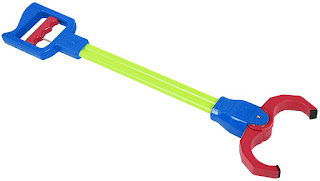
In the case of Pickett v. Target Corp., No. 3:20-CV-00237 (M.D. Pa. Nov. 5, 2021 Mannion, J.), the court granted summary judgment in a store slip and fall case.  According to the Opinion, the Plaintiff fell as a result of encountering a children's grabber toy that was on the floor in a well lit aisle fo the store.

In so ruling, the court primarily accepted the defense that the incident involved an open or obvious danger. More specifically, the court found that the presence of an easily visible fallen object in a well-lit aisle in the store is an obvious as a matter of law. 

The court also reaffirmed the basic rule of law that a person must watch where he or she is walking.

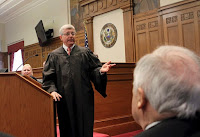
Judge Malachy E. Mannion
M.D.Pa.

Judge Mannion also ruled that, in a slip and fall case, the fact that a type of incident allegedly occurred frequently cannot be generally utilized to establish actual notice of a particular condition allegedly involved in a particular accident.

The court additionally rejected, as a circumlocution, the argument that the Defendant did not adequately monitor an area of the store because, if it had, the accident would not have occurred.

The court otherwise rejected the argument of constructive notice by confirming that the Plaintiff did not offer any evidence as to how long the object at issue was on the floor.

Anyone wishing to review a copy of this decision may click this LINK.  The Court's companion Order can be viewed HERE.

I send thanks to Attorney James M. Beck of the Philadelphia office of the Reed Smith law firm for bringing this case to my attention.

Friday, September 10, 2021

Trip and Fall Case Allowed to Proceed to Jury on Question of Whether Defect Was Open and Obvious


In the case of Perotti v. Festival Fun Parks, LLC, No. 2:19-cv-1176 (W.D. Pa. July 27, 2021 Stickman, J.), the court denied a Defendant amusement park’s Motion for Summary Judgment in a trip and fall matter.

According to the Opinion, the Plaintiff tripped and fell on a hole in the ground in a parking lot.

The Plaintiff and her witness testified that the hole was difficult to see and that the Plaintiff never saw it before she fell.

The Defendant argued that it was entitled to summary judgment because the hole was open and obvious and should have been seen or known to by any reasonable passerby.  As stated, the Plaintiff and her witness alleged that the hole could not be easily seen. The Plaintiff and her witness even asserted that the hole was camouflaged.

The court ruled that, based upon the record before it, including the descriptions of the hole, an issue of material fact existed and it was for the jury to determine whether the hole was open and obvious.

Anyone wishing to review a copy of this decision may click this LINK.


Source: “Digest of Recent Opinions.” Pennsylvania Law Weekly (Aug. 12, 2021).

Source of image (not subject park): Photo by Israel Palacio on Unsplash.com.

Tuesday, March 24, 2020

Motion To Dismiss Granted in Trip and Fall Case Due To Open and Obvious Condition


In the case of Moknach v. Presque Isle Downs, Inc., No. 1:18-CV-261 (W.D. Pa. March 2, 2020 Baxter, J.), a Defendant’s Motion to Dismiss was granted in a premises liability matter.

After reviewing the facts before it, the court ruled that a Defendant landowner did not owe any duty to a Plaintiff business invitee to prevent her from tripping over a large sign stored on the outdoor patio of a casino which the Plaintiff and her husband frequented.  The sign was red and several feet in length.   

The court agreed with the defense that the object was an obvious hazard. The court reiterated the rule of law that a person must look where he or she is going. The court found that the Plaintiff had an obligation to observe her surroundings and did not. 

As such, the Defendant’s Motion to Dismiss was granted. 

Anyone wishing to review a copy of this decision may click this LINK.

I send thanks to Attorney James M. Beck of the Philadelphia office of the Reed Smith law firm for bringing this case to my attention.

Thursday, January 3, 2019

Summary Judgment Granted in Store Slip and Fall Case


Summary Judgment was granted to a Defendant in the slip and fall case of Thomas v. Family Dollar Stores of Pennsylvania, LLC, No. 2:17-CV-04989 (E.D. Pa. Nov. 19, 2018 Kelly, J.).

In this matter, the Plaintiff alleged that she slipped and fell on a thick, yellow substance on the floor of the Defendant’s store while she was looking at the store shelves.   The court noted that the substance on the floor was next to a broken glass bottle.  

In its Motion for Summary Judgment, the Defendant argued that the substance was an open and obvious condition and that it owed no duty of care to the Plaintiff as it had no actual or constructive notice of the condition.  

The court in this matter noted that the record confirmed that the Plaintiff had acknowledged that there were no visual obstructions surrounding the liquid that concealed it from her view.   However, the Plaintiff was arguing that she was focused on the products on display on the store’s shelves at the time she fell. The Plaintiff contended that this was reasonable conduct for a shopper.  

The court rejected the Plaintiff’s argument in this regard, finding that it was “hornbook law in Pennsylvania that a person must look where he [or she] is going.”  

Judge Kelly also reviewed various Pennsylvania and Federal Court decisions applying Pennsylvania law that had rejected similar arguments by other Plaintiffs.    The court noted that the Pennsylvania Supreme Court had observed in the case of Rogers v. Max Azen, Inc., 16 A.2d 529 (Pa. 1940), that, although a lesser degree of attention was required of customers in stores as compared to those walking along sidewalks, the general rule that a Plaintiff must still watch where he or she was walking still applied and that, where one is injured as a result of a failure on his or her part to observe and avoid an obvious condition, the claim fails.  

Turning to the record before it, the court in Thomas ruled that the evidence revealed that the substance on the floor next to the broken glass in this case posed an obvious condition such that its danger should have been readily apparent to a person exercising normal perception and judgment.   Based on these findings, the court ruled that the Defendant did not breach any duty of care to the Plaintiff.  

The court in Thomas went on to also find that the Plaintiff’s claim failed due to the failure of the Plaintiff to show actual or constructive notice on the part of the Defendant of the condition.   The Plaintiff’s general assertion that the Defendant was negligent based upon a lack of policies and procedures for maintenance and safety in the Defendant’s store was rejected as insufficient to show that the Defendant had constructive notice of the spill.  

The court additionally noted that the Plaintiff failed to provide any evidence as to how long the spill was on the floor.   The court noted that an alleged failure to perform a safety sweep said nothing about how long the spill was actually present.   As such, the Defendant’s Motion for Summary Judgment was granted on this additional ground as well. 

Anyone wishing to review of a copy of this case may click this LINK.

Source: “Digest of Recent Opinions,” Pennsylvania Law Weekly (Dec. 4, 2018)