Wednesday, December 29, 2021

Judge Robert D. Mariani of Federal Middle District Court Addresses Motion for Remand


In the case of Miller v. State Farm Mut. Auto. Ins. Co., No. 3:21-CV-1433-RDM (M.D. Pa. Dec. 14, 2021 Mariani, J.), the court granted a Plaintiff’s Motion to Remand a UIM breach of contract case back to the Lackawanna County Court of Common Pleas.

In this matter, the Plaintiff had UIM coverage with State Farm in the amount of $25,000.00 per person. In her Complaint, the Plaintiff demanded judgment against State Farm in an amount in excess of $50,000.00 plus interest, costs, and other such relief the court may deem appropriate. 

With her Motion for Remand, the Plaintiff asserted that the amount in controversy did not exceed the federal jurisdiction limit of $75,000.00 and that, as such, the action must be remanded to the state Court of Common Pleas.

Judge Mariani reviewed the removal statute and noted that this statute was required to be strictly construed, with all doubts to be resolved in favor of a remand.

The court additionally noted that the test for determining whether a case involved the requisite federal jurisdictional amount is whether, from the allegations in the pleadings, it is apparent, “to a legal certainty” that the Plaintiff cannot recover the amount claimed, or if, from the proofs, the court is satisfied to a like certainty that the Plaintiff never was entitled to recover that amount. See Op. at 3-4.

Judge Mariani also noted that the United States Supreme Court has long held that Plaintiffs may limit their claims in order to avoid federal subject matter jurisdiction. 

Moreover, where a Plaintiff has not specifically alleged in the Complaint that the amount in controversy is less than the jurisdictional minimum, the case must still be remanded if it appears to a legal certainty that the Plaintiff cannot recover the jurisdictional amount.

The court also noted that, where a Complaint does not limit its request for damages to a precise monetary amount, the District Court must make an independent appraisal of the potential value of the claim.

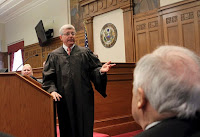
Judge Robert D. Mariani
M.D.Pa.


Judge Mariani noted that it was alleged in the Complaint that the Plaintiff’s UIM policy provided UIM benefits in the amount of $25,000.00 per person. The court also emphasized that there was no companion claim for bad faith or punitive damages asserted in the Complaint. It was additionally noted that, relative to this Motion for Remand, the Plaintiff conceded that the Defendant’s only exposure was to $25,000.00 UIM policy limits.

The court rejected the defense argument that federal court jurisdiction had been met under the analysis that the tortfeasor had $100,000.00 in liability coverage which required the Plaintiff to prove her damages were in excess of that liability coverage in order to gain access to the UIM benefits, which necessarily placed the amount in controversy above the $75,000.00 jurisdictional requirement.

Judge Mariani stated that there was no case law in support of this argument. The court reiterated that the Plaintiff’s breach of contract recovery was restricted to the $25,000.00 limits set forth in her State Farm policy.

As such, where the court deemed that it appeared to a “legal certainty” that the Plaintiff could not recover the jurisdictional amount necessary to confer subject matter jurisdiction on this federal court, and given that the federal court is required to strictly construe removal statutes with all doubts to be resolved in favor of a remand, the decision was made to remand the case to the Lackawanna County Court of Common Pleas.

In a footnote at the end of his decision, Judge Mariani again emphasized “the importance of the fact that Plaintiff’s Complaint only alleges a claim for underinsured motorist benefits/breach of contract.”  See Op. at p. 7, fn.3. In that same footnote, Judge Mariani stated that, “[i]f Plaintiff had included a claim for bad faith, the Court would find that remand was not appropriate.” Id.

Anyone wishing to review a copy of this decision may click this LINK.

Judge Mariani Remands Another Case Back to State Court

Making a U-Turn Back to State Court

In the case of Blizman v. Travelers Home and Marine Ins. Co., No. 3:21-CV-1546-RDM (M.D. Pa. Dec. 9, 2021 Mariani, J.), the court granted a Plaintiff’s Motion to Remand a breach of contract and bad faith claim back to the state court.

According to the Opinion, the Plaintiff filed a Writ and served it upon the carrier.

Thereafter, the defense attorney entered his appearance on behalf of the carrier.

The Complaint was then filed and sent to the defense lawyer. The Complaint was mailed to the insurance company.

Judge Mariani found that the Complaint had been served and that the timeline for removal was triggered on the date that the defense lawyer was served since the Writ was previously properly served and the defense attorney had previously entered his appearance.

In so ruling, the court reviewed the removal procedure set forth under 28 U.S.C. §1446 and noted that the removal statutes are required to be strictly construed with all doubts to be resolved in favor of a remand where appropriate.

Applying that law to the case before him, Judge Mariani ruled that the case should be remanded.

Anyone wishing to read this decision may click this LINK. The Court's companion Order can be viewed HERE.

Source of image: Photo by Patrick Doyle on Unsplash.

Tuesday, December 28, 2021

Appeal Dismissed Where Trial Court Order Did Not Dispose of All Claims or All Parties

In the case of D’Angelo v. J.P. Morgan Chase Bank, N.A., No. 2007-0041-40 (C.P. Bucks Co. Oct. 15, 2021 Trauger, J.), the court issued a Rule 1925(a) Opinion in support of its previous Order in this case involving alleged forgeries on mortgages.

The court dismissed the Plaintiffs’ appeal from an Order granting one Defendant's Motion for Summary Judgment as premature. The appeal was dismissed because the subject Order was found not to be a final Order where that Order did not dispose of all claims and/or all parties, and did not otherwise constitute an Order that was appealable under any of the other applicable exceptions or on an interlocutory basis.

The trial court requested that the Superior Court affirmed its decision in this regard.

Anyone wishing to review a copy of this decision may click this LINK.

Source: “Digest of Recent Opinions.” Pennsylvania Law Weekly (Dec.1, 2021).


Monday, December 27, 2021

THE 2021 TORT TALK TOP TEN


10.  Regular Use Exclusion


In a case of appellate first impression of Rush v. Erie Insurance Exchange, No. 1443 EDA 2020 (Pa. Super. Oct. 22, 2021), the Pennsylvania Superior Court affirmed a Northampton County Common Pleas Court decision in a declaratory judgment action and held that the regular use exclusion found in motor vehicle policies is unenforceable because it violates the Motor Vehicle Financial Responsibility Law (MVFRL). This issue appears to be on its way up to the Pennsylvania Supreme Court.

Click HERE to view the Tort Talk Blog post on this case.


9.  Attorney Malpractice

In the case of Clark v. Stover, 242 A.3d 1253 (Pa. Dec. 20, 2020), the Pennsylvania Supreme Court adopted the "occurrence rule" for attorney malpractice cases and held that the statute of limitations in a legal malpractice claim begins to run when the alleged malpractice occurs.

The court rejected the "continuous representation rule" which holds that the statute of limitations in a legal malpractice claim would begin to run when the legal representation was concluded.

Please click HERE to view the Tort Talk Blog post on this case.


8.   COVID-19 Business Interruption Coverage Cases

Over the past year, many state and federal trial court judges grappled with coverage actions concerning whether the COVID-19 related governmental orders requiring businesses to close their doors supported Business Interruption coverage claims. There were mixed results, but a majority of the court decisions favored the insurance carriers with findings that the coverage provisions were not implicated and/or that exclusionary language within the policies were implicated.

To review Tort Talk Blog posts on these types of cases, please click HERE.


7.  Sudden Emergency Doctrine Still Valid in PA

In the case of Graham v. Check, 243 A.3d 153 (Pa. Dec. 22, 2020)(Op. By Wecht, J.), the Pennsylvania Supreme Court reaffirmed the continuing validity of the sudden emergency doctrine for motor vehicle accident matters in Pennsylvania. However, the Supreme Court cautioned that the application should not be automatic and depends on appropriate facts being present for the doctrine to apply.

The Tort Talk Blog post on this decision can be viewed at this LINK.

My Pennsylvania Law Weekly article analyzing the impact of the Graham v. Check decision can be viewed HERE.


6.  Medical Malpractice

In the case of Leadbitter v. Keystone Anesthesia Consultants, 256 A.3d 1164 (Pa. 2021), much to the surprise of many, the Pennsylvania Supreme Court issued a defense-favorable decision and held that Peer review "proceedings" or "records" were not discoverable under the Pennsylvania Peer Review Protection Act.

To view the Tort Talk Blog post on this case, please click this LINK.


5.   Internet-Based Defamation Claims Can Be Filed Anywhere

In the case of Fox v. Smith, No. 39 EAP 2019 (Pa. Nov. 17, 2021) (Op. by Saylor, J.), the Pennsylvania Supreme Court addressed whether the standards governing the selection of an appropriate venue of litigating libel or defamation claims grounded on newspaper publications should also be applied to causes of action premised upon internet-based publications.

The Court ultimately ruled that internet-based defamation claims can be filed anywhere the defamatory statements were viewed and understood as defamatory.

The Tort Talk Blog post on this case can be viewed LINK.


4.  Allegations of Recklessness

Over the past year, trial court judges across Pennsylvania, and some even in the same county, have split over the types of factual allegations that may or may not be necessary to support an allegation that a tortfeasor defendant acted recklessly during the course of a personal injury-causing event.

Some more liberal trial court judges allow for allegations of recklessness to be pled with reckless abandon and allow such allegations in any case whatsoever, regardless of the underlying facts involved. These judges rely upon dicta from one appellate court decision along with a tortured reading of the law to conclude that, since an allegation of recklessness is an allegation as to a defendant's state of mind and since allegations as to a party's state of mind may be generally pled under Pa.R.C.P. 1019, then it must be that allegations of recklessness may also be generally pled.

A majority of other trial court judges follow the long-standing maxim espoused in numerous Pennsylvania appellate court decisions that Pennsylvania is a fact-pleading state and that, therefore, allegations of outrageous facts are necessary to state a claim of recklessness to thereby potentially open the door to a punitive damages claim.

Look for my article in the upcoming January edition of the Pennsylvania Bar Quarterly outlining both sides of this issue and noting that further appellate guidance is needed to put the issue to rest.

To view at least 63 Tort Talk Blog posts on cases involving allegations of recklessness, please click this LINK.


3.  Household Exclusion Finally Dead?

In 2020 and 2021, there remained questions as to whether the Household Exclusion was still a valid exclusion after the Pennsylvania Supreme Court's decision in Gallagher v. GEICO.

Then in the 2021 case of Donovan v. State Farm Mutual Automobile Insurance, 256 A.3d 1145 (Pa. Aug. 17, 2021), the Pennsylvania Supreme Court again answered questions on issues surrounding inter-policy stacking and the household exclusion.

After finding that the stacking waiver form at issue in this case was invalid as applied to inter-policy stacking claims, the Pennsylvania Supreme Court went on to rule that the policy’s household exclusion was also unenforceable absent a valid written waiver of inter-policy stacking, because the language of that exclusion was incompatible with stacking. In this regard, the court cited to its previous decision in the case of Craley v. State Farm Fire and Casualty, 895 A.2d 530 (Pa. 2006).

The court in Donovan also reiterated its previous decision in Gallagher v. GEICO and again ruled that the household exclusion provision is invalid since it acted as a de facto waiver of stacking, when Pennsylvania law requires the carrier to secure a written waiver of stacked coverage to be secured from an insured.


2.  Spencer v. Johnson (The Fair Share Act)

The Fair Share Act was passed ten years ago in 2011 and changed the law of Pennsylvania to hold that each Defendant should only have to pay its own percentage of responsibility for causing an injury (unless a Defendant is found to be 60% or more responsible, in which case that Defendant could be made to pay the entire verdict).

For the last decade, there has not been any significant dispute or litigation over the application of that Act.

Then comes along the decision in Spencer v. Johnson, 249 A.3d 529 (Pa. Super. 2021), in which the Pennsylvania Superior Court raised the question of whether the Fair Share Act applies to those cases where there is an innocent Plaintiff who bears no percentage of responsibility for the happening of the accident.

Here is a LINK to the Tort Talk post on this case.

Here is a LINK to my Pennsylvania Law Weekly article on this case.

The question has become whether, under the wording of the Fair Share Act, should an innocent Plaintiff be allowed to argue that the Fair Share Act does not apply such that he or she should therefore be able to recover the entire verdict against any Defendant, even if that Defendant is found to only be 1% responsible.

The analysis of this question in Spencer v. Johnson appears to be dicta and the result of an Advisory Opinion (only 2 of 3 Superior Court Judges on the panel participated in the decision) and, as such, this important question appears to remain to be finally answered by another appellate court.  But the tone has been set.


1.  The Continuing Impact of the COVID-19 Pandemic on the court system and practice of law

While the hope in 2021 was that the COVID-19 Pandemic would wane, it unfortunately did not. As such, Zoom depositions and court arguments remained the norm and trials proceeded under social distancing safety protocols.

Court officials at all levels have begun to talk about amending the various Rules of Court to address the ongoing use of Advanced Communication Technology (ACT) going forward and even after the Pandemic ends.


Trends to Watch in 2022:

-Continuing use of Advanced Communication Technology to keep civil litigation matters moving forward.

-Continuing disputes over the application of the Fair Share Act in cases where there is an innocent Plaintiff (i.e., a guest passenger plaintiff, a plaintiff hit in a crosswalk, a plaintiff under anesthesia).

-Continuing split of authority over whether outrageous factual allegations are required to state a claim of recklessness in a personal injury Complaint.

-Continuing use of alternative dispute resolution services to resolve matters outside of the courtroom, including by way of Zoom Arbitrations and Zoom Mediations.


Bring Your Case To A Close in 2022


(570) 319-5899

dancummins@CumminsLaw.net

Friday, December 24, 2021

Case Arising Out of Slip and Fall Caused by Toy in a Store Aisle Dismissed


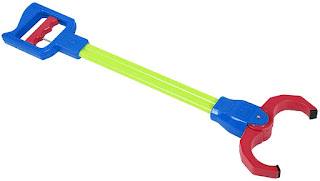
In the case of Pickett v. Target Corp., No. 3:20-CV-00237 (M.D. Pa. Nov. 5, 2021 Mannion, J.), the court granted summary judgment in a store slip and fall case.  According to the Opinion, the Plaintiff fell as a result of encountering a children's grabber toy that was on the floor in a well lit aisle fo the store.

In so ruling, the court primarily accepted the defense that the incident involved an open or obvious danger. More specifically, the court found that the presence of an easily visible fallen object in a well-lit aisle in the store is an obvious as a matter of law. 

The court also reaffirmed the basic rule of law that a person must watch where he or she is walking.

Judge Malachy E. Mannion
M.D.Pa.

Judge Mannion also ruled that, in a slip and fall case, the fact that a type of incident allegedly occurred frequently cannot be generally utilized to establish actual notice of a particular condition allegedly involved in a particular accident.

The court additionally rejected, as a circumlocution, the argument that the Defendant did not adequately monitor an area of the store because, if it had, the accident would not have occurred.

The court otherwise rejected the argument of constructive notice by confirming that the Plaintiff did not offer any evidence as to how long the object at issue was on the floor.

Anyone wishing to review a copy of this decision may click this LINK.  The Court's companion Order can be viewed HERE.

I send thanks to Attorney James M. Beck of the Philadelphia office of the Reed Smith law firm for bringing this case to my attention.

Wednesday, December 22, 2021

Lessons on Compelling Parties and Witnesses to Attend Trial (Note That There Are Different Rules to Follow) [CORRECTED LINK TO DECISION]


In the case of Snyder v. North American Partners in Anesthesia, No. 19-CV-83 (C.P. Lacka. Co. Nov. 19, 2021 Nealon, J.), the court addressed a Pre-Trial Motion to Quash a Notice to Attend directed to witnesses to appear at a medical malpractice trial.

In his Order, Judge Nealon emphasized that the Defendant had served a Notice to Attend under Pa.R.C.P. 234.3, and not under Pa.R.C.P. 234.1, to the Plaintiff’s brother-in-law and the Plaintiff’s adult daughter to testify as witnesses at trial regarding issues related to the medical history of the Plaintiff and work issues.

The Plaintiffs objected and the issue came before the court.

Judge Nealon noted that the “Pennsylvania Rules of Civil Procedure contain straightforward provisions governing the practice to be followed in compelling the attendance of parties and non-party witnesses to testify at trial.

The Notice to Attend addressed to the non-party witnesses in this case was presented by the defense under Pa. R.C.P. 234.3.  

Judge Nealon confirmed that a review of that rule confirmed that it only pertained to Notice to Attend requiring the trial attendance of “another party or an officer or managing agent thereof” for trial. As such, the court found that the defense was erroneously proceeding under the wrong Rule of Civil Procedure and attempting to compel the attendance of a non-party witness.

Judge Nealon noted that non-party witnesses can be compelled to attend trial under a “Subpoena to Attend and Testify” as provided by Pa. R.C.P. 234.1.

The court additionally noted that, when sending a Subpoena to Attend and Testify at trial to a non-party witness, the rule requires that the subpoena be served reasonably in advance of the date upon which attendance was required.

Based upon these errors, the court granted the Plaintiff’s Motion to Quash the Notice to Attend sent by the Defendants.

Anyone wishing to review a copy of this decision may click this LINK.

Lessons On Compelling Parties and Witnesses to Attend Trial (Note That There Are Different Rules to Follow)


In the case of Snyder v. North American Partners in Anesthesia, No. 19-CV-83 (C.P. Lacka. Co. Nov. 19, 2021 Nealon, J.), the court addressed a Pre-Trial Motion to Quash a Notice to Attend directed to witnesses to appear at a medical malpractice trial.

In his Order, Judge Nealon emphasized that the Defendant had served a Notice to Attend under Pa.R.C.P. 234.3, and not under Pa.R.C.P. 234.1, to the Plaintiff’s brother-in-law and the Plaintiff’s adult daughter to testify as witnesses at trial regarding issues related to the medical history of the Plaintiff and work issues.

The Plaintiffs objected and the issue came before the court.

Judge Nealon noted that the “Pennsylvania Rules of Civil Procedure contain straightforward provisions governing the practice to be followed in compelling the attendance of parties and non-party witnesses to testify at trial.

The Notice to Attend addressed to the non-party witnesses in this case was presented by the defense under Pa. R.C.P. 234.3.  

Judge Nealon confirmed that a review of that rule confirmed that it only pertained to Notice to Attend requiring the trial attendance of “another party or an officer or managing agent thereof” for trial. As such, the court found that the defense was erroneously proceeding under the wrong Rule of Civil Procedure and attempting to compel the attendance of a non-party witness.

Judge Nealon noted that non-party witnesses can be compelled to attend trial under a “Subpoena to Attend and Testify” as provided by Pa. R.C.P. 234.1.

The court additionally noted that, when sending a Subpoena to Attend and Testify at trial to a non-party witness, the rule requires that the subpoena be served reasonably in advance of the date upon which attendance was required.

Based upon these errors, the court granted the Plaintiff’s Motion to Quash the Notice to Attend sent by the Defendants.

Anyone wishing to review a copy of this decision may click this LINK.