Wednesday, March 2, 2022

Case Against Wal-Mart Remanded Back to State Court After Defendant Found Not To Have Removed the Case in Time


In the case of Berry v. Wal-Mart Stores, East, L.P., No. 21-3496 (E.D. Pa. Feb. 2, 2022 Slomsky, J.), the court granted a Plaintiff’s Motion to Remand the case back to state court.

The court noted that the case would be remanded because the Defendants failed to remove the matter to federal court within thirty (30) days of being able to ascertain that the amount in controversy to establish diversity jurisdiction was met.

The court noted that, even though the Complaint did not directly state the amount in controversy, the facts pled noted that the Plaintiff had sustained a crush injury to her foot and that the Plaintiff was still undergoing continuing medical treatment. The court felt that, from these allegations, the Defendants could have reasonably and intelligently concluded that the jurisdictional amount was exceeded.

As such, the court reiterated the rule that the removal period began to run at the time the suit was filed, and not when the Plaintiff may have later specified damages in a Case Management Memorandum. 

While the court noted that the Case Management Memorandum could qualify as an “other paper” under the removal statute for purposes of attempting to ascertain the amount in controversy, the Complaint in this case was found to have provided enough information to start the running of removal period.

In this regard, the court noted that an ad damnum clause for a dollar amount less than the jurisdictional amount does not necessarily preclude a finding that the Plaintiff is seeking more than that amount. 

The court in this Berry case stated that, since the Plaintiff did not agree to stipulate to limit damages to the jurisdictional amount, the Defendants had other bases upon to believe that more money than the jurisdictional limit was being sought by the Plaintiff.

Anyone wishing to review a copy of this decision may click this LINK.  The Court's companion Order can be viewed HERE,


I send thanks to Attorney James M. Beck from the Philadelphia office of the Reed Smith law firm for bringing this case to my attention.

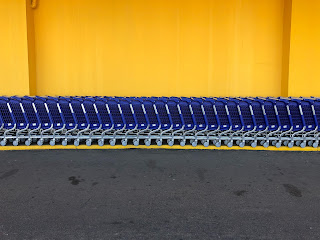
Source of image:  Photo by Fabio Bracht on www.unsplash.com.

Specific Jurisdiction Issues Addressed in a Trucking Accident Case Involving a Canadian Trucker


In the case of Allen v. Foxway Transp., No. 4:21-CV-00156 (M.D. Pa. Jan. 27, 2022 Brann, C.J.), the court denied various Motions to Dismiss and/or To Transfer Venue and, in doing so, provided a detailed discussion of the current state of federal law on the issue of specific jurisdiction.

In particular, the court addressed the issue of the required minimum contacts sufficient to establish jurisdiction in Pennsylvania over a trucking company and/or a broker with regards to hauling freight headed for Pennsylvania.

Judge Brann’s Opinion contains an analysis of the “alien-venue rule” as it relates to the Canadian Defendant in this cause of action. The court additionally addressed the distinctions between requests for venue transfer under §1406(a) and 1404(a) in the U.S. Code.

In his Opinion, Judge Brann also touched upon other issues such as vicarious liability, allegations of joint venture, and claims for punitive damages in this trucking accident case.

Anyone wishing to review a copy of this decision may click this LINK.  The Court's Order can be viewed HERE.


I send thanks to Attorney Harry P. McGrath, Jr., of this Kingston, Pennsylvania law firm of Fellerman & Ciarimboli for bringing this case to my attention.

Tuesday, March 1, 2022

Chief Judge Brann of Federal Middle District Court Addresses Variety of Products Liability Issues


In the case of Goodling v. Johnson & Johnson, No. 4:21-CV-00082 (M.D. Pa. Feb. 10, 2022 Brann, C.J.), the court granted in part and denied in part a Motion to Dismiss in a medical device strict liability and negligence claim reagarding pelvic mesh product.

The court found that, although the Plaintiffs’ Complaint provided comparatively little information about the medical procedure and the injuries at issue, the allegations were found to provide adequate notice of the claims and supporting facts and could not be dismissed as an alleged shotgun pleading.

Notably, Judge Brann also ruled that Pennsylvania law did not require an application of the Restatement of Torts (Second) §402A, comment k, across the board to bar strict liability claims against medical devices. 

Chief Judge Matthew W. Brann
M.D. Pa.


Judge Brann noted that Pennsylvania Superior court precedent barring such claims has been undermined by other decisions. Judge Brann felt that comment k applied to medical devices only on a case-by-case basis.

While the court found that the Plaintiff’s strict liability allegations involving a design defects and with respect to warnings were adequately pled, the court dismissed the strict liability manufacturing defect claim because there was no allegation made that the device deviated in some unique way from its intended design.

Judge Brann additionally dismissed the Plaintiff’s negligent misrepresentation and fraud claims as duplicative of the Plaintiffs’ warning claims.

The court also noted that the claim of unjust enrichment did not apply in products liability claims where the Plaintiff actually received and used the product. 

Elsewhere in his decision, Judge Brann also confirmed the rule of law that punitive damages are not to be considered a separate cause of action, but rather, an element of damages.

Anyone wishing to review a copy of this notable decision by Chief Judge Brann of the Federal Middle District Court of Pennsylvania may click this LINK.  The Court's companion Order can be viewed HERE

I send thanks to Attorney James M. Beck from the Philadelphia office of the Reed Smith law firm for bringing this case to my attention.

General Jurisidiction Fails But Specific Jurisdiction Prevails Over Trucking Defendants


In the case of Allen v. Foxway Transp., Inc., No. 4:21-CV-00156 (M.D. Pa. Jan. 27, 2022 Brann, C.J.), the court denied a Motion to Dismiss based upon general personal jurisdiction issues raised in a tractor trailer accident case that involved Pennsylvania Plaintiffs and out-of-state Defendants.  The accident actually happened in New York state.

The court found that there was no basis for general personal jurisdiction over either of the Defendants in this case.  Chief Judge Matthew W. Brann noted that general jurisdiction exists over foreign defendants when their contact with Pennsylvania is so systematic and continuous as to render them at home in Pennsylvania.  Here, the court found that the frequent freight hauling into Pennsylvania is simply the regular course of doing business which is insufficient to trigger jurisdiction over a Defendant.

The court additionally reiterated a rule that the designation of a Pennsylvania registered agent as a federally regulated motor carrier also did not serve to create general jurisdiction.

However, Chief Judge Matthew W. Brann ruled that, since the Defendant was shipping freight that was destined to go to Pennsylvania and given that the trucker had injured Pennsylvania residents during the course of the trip, there was enough case-specific contacts by the Defendant to support a finding of specific personal jurisdiction over the Defendant trucking company and driver even though the subject accident occurred outside of Pennsylvania.

The court noted that the other Defendant, who had brokered numerous Pennsylvania shipments, including the one at issue in this case, was found to have the same state-specific contacts with Pennsylvania to support a finding of specific personal jurisdiction over that Defendant as well.

Anyone wishing to review a copy of this decision may click this LINK.  The Court's companion Order can be viewed HERE


I send thanks to Attorney James M. Beck from the Philadelphia office of the Reed Smith law firm for bringing this case to my attention.

Source of image:  Photo by Addy Mae from www.unsplash.com.

Monday, February 28, 2022

Another Federal District Court Finds that the Regular Use Exclusion is Invalid And Makes a Prediction.....


On the heels of the Western District Court decision in Johnson v. Progressive Adv. Ins. Co. summarized on Friday here on Tort Talk (See that Tort Talk post at this LINK), comes Judge Malachy E. Mannion's decision out of the Federal Middle District Court of Pennsylvania denying a carrier's motion for summary judgment based upon an effort to rely upon a Regular Use Exclusion.  Judge Mannion predicted that, if faced with this same issue, the Pennsylvania Supreme Court would rule in the same fashion.

In the Federal Court case of Evanina v. The First Liberty Ins. Corp., No. 3:20-CV-00751-MEM (M.D. Pa. Feb. 25, 2022 Mannion, J.), the Court denied a carrier’s motion for summary judgment on a Plaintiff’s UIM claim in which the carrier was attempting to rely upon the Regular Use Exclusion.

According to the Opinion, the Plaintiff, who was a home health worker, was in a motor vehicle accident and secured the minimal policy limits available under the tortfeasor’s policy.

At the time of the accident, the Plaintiff was operating a vehicle that was owned by her employer.  That vehicle was insured by Philadelphia Indemnity Insurance Company.

At the time the Plaintiff was also covered under another UIM policy issued by First Liberty Insurance Company, which presumably covered her personal vehicle (the Opinion does not so state or specify).

The Plaintiff settled for the minimal policy liability limits possessed by the tortfeasor.

The Plaintiff then submitted a first-tier UIM claim to Philadelphia Indemnity and a second-tier UIM claim with First Liberty.

The second-tier carrier, First Liberty, denied coverage to the Plaintiff under the Regular Use Exclusion contained in its policy.

Thereafter, the Plaintiff commenced this breach of contract claim against First Liberty.  A motion for summary judgment was eventually filed by First Liberty which resulted in this decision being issued by Judge Mannion.

Judge Malachy E. Mannion
M.D.Pa.


The court confirmed that the issues in this case were being addressed after the previous issuance of the Pennsylvania Superior Court’s decision in Rush v. Erie Ins. Exchange, 256 A.3d 794 (Pa. Super. 2021), in which that court held that regular use exclusions were not enforceable because they run counter to Pennsylvania’s Motor Vehicle Financial Responsibility Law.

In this Federal Court matter, the carrier attempted to argue that the regular use exclusion was still valid even though the Superior Court invalidated it in Rush. The insurance company attempted to cite to the Pennsylvania Supreme Court Opinion in Williams v. Geico Govt. Emp. Ins. Co., 32 A.3d 1195 (Pa. 2011).

Similar to Judge Schwab's decision in Western District Court case of Johnson v. Progressive Adv. Ins. Co., Judge Mannion in this Middle District Court case of Evanina decided not to follow the Williams decision and found that the Williams decision was only a public policy based decision and not statutorily based decision as the more recent Rush decision was relative to the MVFRL.

Judge Mannion noted that the Pennsylvania Supreme Court had not yet addressed the validity of the Regular Use Exclusion in the context of whether that exclusion runs afoul of Pennsylvania's MVFRL.  As such, Judge Mannion stated that he was required to attempt to predict how the Pennsylvania Supreme Court might rule on this issue if faced with this issue.

Judge Mannion reviewed certain recent Pennsylvania Supreme Court decisions such as the Gallagher v. GEICO decision and the Donovan v. State Farm decision in both of which the Pennsylvania Supreme Court had ruled that the household exclusion was invalid and, therefore, unenforceable.  The Court in this Evanina case noted that the household exclusion was "a substantially similar exclusion [as compared] to the regular use exclusion."  See Op. at p. 15 [bracket inserted here].  

As such, Judge Mannion predicted that, "considering the trend of the Pennsylvania Supreme Court in its rulings," if faced with the issue of the validity of the Regular Use Exclusion, the Pennsylvania Supreme Court would find this exclusion to be invalid and, therefore, unenforceable.    See Op. at p. 16. 

Accordingly, Judge Mannion ruled in the same fashion and denied the UIM carrier's motion for summary judgment as a result.

Anyone wishing to review a copy of this decision may click this LINK.


I send thanks to Attorney Scott Cooper of the Harrisburg, PA law office of Schmidt Kramer for bringing this case to my attention. I note that the Plaintiff's attorneys in this Evanina case were Neil O'Donnell and Gerard Gaughan of the O'Donnell Law Offices in Kingston, PA.

Friday, February 25, 2022

Microorganism Exclusion Found to Preclude Coverage for Business Shut Down by COVID-19 Pandemic Closure Order


In the case of Big Red Management Corp. v. Zurich Amer. Ins. Co., No. 2:20-CV-02113-KSM (Jan. 7, 2022 Marston, J.), the court ruled that a restaurant was not entitled to coverage for business losses allegedly caused by COVID-19 governmental closure orders where the insurance policy in question contained a microorganism exclusion.

The court also noted that coverage was properly denied by the carrier in that there had been no evidence of any direct physical damage or loss to the insured’s property. The court additionally held that coverage was properly denied because the governmental closure orders did not completely prohibit access to the restaurant since the restaurant was permitted to continue to offer takeout and delivery services.

As such, the court granted the Defendant’s Motion to Dismiss.

Anyone wishing to review a copy of this decision may click this LINK.  The Court's companion Order can be viewed HERE.

Source: “Digest of Recent Opinions.” Pennsylvania Law Weekly (Feb. 3, 2022).

Thursday, February 24, 2022

Volunteer Jurors Needed for the March 3 Lackawanna County Mock Trial Competitions (Virtual)


Volunteer jurors are needed for the virtual Mock Trial competitions that are set to take place online on March 3, 2022 at 6 p.m.

You can participate from the comfort of your own home.

If you are able to help out, please contact Katie Nealon, Esq. at knealon@munley.com, or Kaitlin McDonough of the Bar Association at kmcdonough@lackawannabar.org, to sign up.  

THANK YOU!!