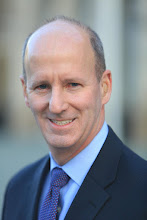
Here is a LINK to an excellent article by Attorney Will Sylianteng of the Doylestown office of WES Litigation that appeared in the February 17, 2015 edition of the Pennsylvania Law Weekly and is entitled "District Court Sanctions Attorney for Ghostwriting Expert Report."
In reference to a case involving sanctions applied to an attorney in a Michigan federal court case, Attorney Sylianteng analyzes the pros and cons of the Pennsylvania court decisions in the case of Barrick v. Holy Spirit Hospital which limits discovery of communications between an attorney and a retain expert.
In his article, Attorney Sylianteng notes that while some members of the bar favor the Barrick decision, others have denounced the ruling (I'm not alone!) as opening the door for "unscrupulous [attorneys] to mold, if not create, their own expert's opinions."
If you are unable to access this interesting article via the link above please let me know and I will send you a copy.
I note that I was the writer of the Pennsylvania Defense Institute's amicus briefs at the Superior Court level in Barrick. Click HERE to review my later May 6, 2014 Tort Talk article on the same topic entitled "A Sad Day for the Truth."
In the case of Harris v. Phila. Facilities Mgmt. Corp., No. 39 C.D. 2014 (Pa. Cmwlth. Dec. 2, 2014 Simpson, McCullough, and Covey, J.J.)(Op. by McCullough, J.), the Pennsylvania Commonwealth Court addressed the propriety of a reference to a police report in a jury trial arising out of a motor vehicle accident.
In this matter, the Plaintiff motorcyclists wished to make reference a police officer's observations in his police report concerning a pothole in the area of the accident, which was allegedly a central fact and/or issue in the happening of the accident. While the trial court noted that some basic facts contained in a police report may be referenced at trial under appropriate circumstances, since the pothole issue was central to this matter, the trial court excluded the police report as a whole.
In this matter, on cross-examination by Plaintiff's counsel, a police officer witness admitted that, prior to taking the witness stand, he had referred to the police report another officer wrote up. The testifying officer did this to refresh his recollection but stated, on the stand, that he was otherwise testifying from his memory and without reference to the report while sitting on the stand.
In Harris, the Commonwealth Court reiterated the general rule that a police accident report is inadmissible in an auto accident case as hearsay evidence.
However the appellate court went on to find that, under Pa.R.E. 612, it was within the trial court's discretion to allow for the witness to review the police report as part of an effort to refresh the witness's recollection. Such a refreshing of a witness's recollection could be accomplished by presenting the witness with documents to review either before the witness takes the stand, or during the time the witness is on the stand.
This decision also supports the long-standing proposition that an expert accident reconstructionist may rely upon, and refer to, a police report in reconstructing an accident. Citing to Pa.R.E. 703, the court noted that a police report is the type of data that such an expert witness is permitted to rely upon in formulating is opinion. Here, the defense expert merely stated that he had relied upon the police report in formulating his opinion and there was no effort on the part of that expert to simply, and impermissibly restate, opinions contained in the police report on central issues to the case.
The Harris court likewise upheld the trial court's rejection of the efforts by the Plaintiff to introduce favorable opinions contained in the police report through the testimony of the Plaintiff's experts. The appellate court cited to 75 Pa.C.S.A. Section 3751(b)(4) to support the ruling that a police report prepared by a police officer who did not witness the accident is inadmissible hearsay evidence and should not be admitted into evidence. The court also noted that a party is not allowed to get such a report into evidence in an indirect manner.
Accordingly, based upon these rulings the appellate court did not find any errors that would require the granting of a new trial as requested.
In its recent "Non-Precedential" decision in the medical malpractice case of Hickman v. Shor-Conroy, No. 2336 EDA 2014 (Pa. Super. Jan. 23, 2015 Donohue, Wecht, Jenkins, J.)(mem. op.), the Pennsylvania Superior Court applied the current status of the law on the admissibility of expert opinions and the doctrine of res ipsa loquitur and affirmed a lower court's entry of summary judgment.
Although "Non-precedential," the case could serve to assist in your research on the current status of these two legal concepts.
In Hickman, the Plaintiff attempted to rely upon the contents of her treating providers office notes as serving as the Plaintiff's expert reports. The court noted that even "[a]ssuming arguendo that the records constitute expert reports, none of the records state, within a reasonable degree of medical certainty" that the Plaintiff's injuries were the result of the medical malpractice alleged.
While the court noted that the Plaintiff need not utilize "magic words," the use of terms of causation such as "most likely" or "in all likelihood" were not sufficient.
As stated the court also rejected the Plaintiff's res ipsa loquitur argument and, in doing so, concisely stated the current status of Pennsylvania law in that regard (referring to Section 328D of the Restatement (Second) of Torts).
Anyone wishing to review this "Non-precedential" Opinion of the Superior Court in Hickman, may click this LINK.
Source: "Medical Reports Don't Count as Expert Reports, Panel Says," by P.J. D'Annunzio The Legal Intelligencer (Jan. 27, 2015).
The below article of mine was published in the February 9, 2015 edition of the Pennsylvania Law Weekly and is republished here with permission from the publisher, American Law Media. All rights reserved.
Legal Profession
Improve Your Practice, Reduce Stress and Prevent Nightmares
Daniel E. Cummins, The Legal Intelligencer
We are all getting older, and possibly more forgetful. Here, then, is a list of some things to remember to improve your practice, reduce stress and prevent late-night terrors.
Check Statute of Limitations Date
Make sure you emphatically highlight the statute of limitations date on any new case that comes in and continually check that date every time you look at the file, up to the time suit is formally commenced. Once suit is commenced, don't fully relax in this regard until service on all defendants is perfected.
Similarly, on the defense side, when a new file comes in, counsel should not assume that the statute of limitations has been satisfied merely because the new suit has made its way to counsel's office for a defense. In addition to checking if the suit was filed in time, don't forget to also check if service was properly perfected.
Moreover, remember to also review the complaint to confirm that the suit was filed in the proper county so as to prevent any forum-shopping by the plaintiff.
Keep Clients Apprised
It has been repeatedly stated that the main client complaint on either side of the bar is the lack of timely communication and updates from counsel.
Rule of Professional Conduct 1.4 requires that a lawyer communicate with a client and keep the client updated. The Pennsylvania Bar Association's Working Rules of Professionalism recommend the same.
One way to avoid forgetting (or avoiding) continual updates to clients would be to set up a process where, on the first (or last) day of every month, you stand in front of your filing cabinets with a portable dictaphone in hand and spit out a short status update to each client in each file. More sophisticated attorneys who have brought their file handling into the 21st century can do this while sitting in front of their computers and scrolling through their files.
This may sound like a daunting, boring task, but once you start to do it, your letters and emails in the subsequent months will flow out smoothly and quickly and you will become very aware of the status of all of your cases from this repeated checking and reporting.
Review Pleadings and Interrogatory Answers with Witnesses
At depositions, once you have exhausted all of your standard questions, take a moment to review the pleadings and interrogatory answers of the opposing party. Such a review may trigger additional important questions to ask.
At a minimum, secure an agreement from the witness that he or she reviewed the pleadings and the discovery and that the signature on the verification is indeed the signature of the witness. Take it one step further and secure the witness' agreement that by signing the verification, he or she agrees that the information is true and correct to the best of his or her knowledge.
Get Answers to Expert Interrogatories
Expert interrogatories are generally sent out to opposing counsel as a matter of course at the beginning of a file. Opposing counsel usually replies to such interrogatories by indicating, "No experts retained to date. Discovery ongoing. Right to supplement and all objections preserved." The expert interrogatories are then forgotten.
Few things are more frustrating in civil litigation than fully preparing to cross an opponent's expert at a trial deposition but being unable to show bias of that expert toward the party because you forgot to follow up on securing complete answers to your expert interrogatories. Typically, an opposing expert will coyly assert that he or she cannot recall what his or her fee was to generate the report or to participate in the deposition.
So, when a file reaches the point where expert reports are produced, remember to follow up with opposing counsel to request that the expert interrogatories previously submitted be supplemented as promised or as required under Pennsylvania Rule of Civil Procedure 4007.4 or Federal Rule of Civil Procedure 26(e).
If necessary, file a motion to compel and request permission of the court to file Cooper v. Schoffstall expert interrogatories to discover the extent to which a "professional witness" expert has previously participated in litigation and has financially gained from it.
Arguably, if the opposing counsel has not previously objected to your expert interrogatories within 30 days of having received such interrogatories, any objections are waived.
This gives rise to another point: Don't forget to send out valid objections to your opponent's expert interrogatories the day you receive those interrogatories to avoid a waiver argument down the road.
Put Rule 238 Language in Settlement Offer Letters
When making any settlement offers to a plaintiff in any personal injury civil litigation matter, defense counsel should remember to include, verbatim, the language required by the delay damages rule, Pennsylvania Rule of Civil Procedure 238, so as to put a cap upon, or even prevent, the addition of such damages to any verdict.
Rule 238(b)(2) provides that, in order to have any effect under this rule, a written offer of settlement "shall contain an express clause continuing the offer in effect for at least 90 days or until commencement of trial, whichever occurs first," and the offer shall be set forth as a specific sum or in the form of a structured settlement.
Several courts in Pennsylvania have ruled that the word "shall" in Rule 238 requires that such language comport to the exact wording set forth in the rule in order to be valid. As such, don't forget to dictate the verbatim Rule 238 language into a form paragraph.
Accordingly, whenever you send out a settlement offer, ask your assistant to include the form Rule 238 paragraph in the letter so as to comply with the rule and potentially limit the plaintiff's recovery.
Stand When Addressing the Court
Apparently, showing respect to the court and members of the bench is a dying trend. Seasoned attorneys may become casual with the traditions of the courtroom, while new lawyers may somehow believe that the nonsense they see in courtroom scenes of television legal dramas is acceptable.
So don't forget to always stand whenever you address the court for whatever reason. When commencing an argument, it is traditional to begin with, "May it please the court." Throw in some, "Yes, your honor," and, "No, your honor." Don't forget to ask for permission to approach a witness.
Moreover, no matter what, whenever a judge starts speaking, stop whatever you are saying no matter how eloquent you may be. If a judge asks you a question, listen to that question and, more importantly, directly answer that question. Judges are lawyers like us and know when their questions are not being answered, so don't even try it.
Mimic Jury Instructions in Your Closing Argument
When preparing for a closing argument at trial, don't forget to review the jury instructions, standard or otherwise, that you know or can reasonably anticipate will be utilized by the court. Incorporate some of the verbatim language, or key phrases, from the instructions that are favorable to your case into your closing argument and say those same words and phrases to the jury.
Perhaps nothing will make you seem more trustworthy to the jury, or that you know what you are talking about, than having the judge say many of the same things in his jury instructions that you just said in your closing argument.
Take Care of Yourself
Perhaps more important than anything else in this article, don't forget to take care of yourself. If you are not in good mental and physical shape, your practice won't be in good shape.
We are at the beginning of a new year. Look ahead and plan some time off now while your calendar is clear. Mark those days or weeks as "Keep Open" or "Vacation." When you do take that time off, forget your phone.
And don't limit yourself to only those days off—take other days along the way if your schedule and time should permit for brief respites (perhaps with your phone at hand to keep emails at bay and matters moving along).
Eat well and make sure you secure sufficient sleep. Exercise, or at a minimum, as some fitness articles suggest, stand every time you are on the phone at your desk. Take a daily brisk walk after lunch. Join a gym, or join the yoga/meditation trend, for stress relief and good health habits.
Say Please and Thank You
Last, but certainly not least, don't forget to say "please" and "thank you" whenever you can throughout your day.
Say it to opposing counsel. What goes around, comes around. Kindness begets kindness.
Say it to the court. But don't say "thank you" whenever you win an objection—that's just plain tacky. While in court, don't forget to be equally polite to other court personnel, such as tipstaff, clerks, court reporters and the like. Those people have close contact with and regularly converse with isolated judges. Perhaps they will portray you in a positive light to the judge, which, in the end, will benefit your clients.
Perhaps most importantly, always say "please" and "thank you" to your co-workers and office staff—that is, the ones who make things go smoother for you day in and day out.
Daniel E. Cummins is a partner and civil litigator with the Scranton, Pa., law firm of Foley Comerford & Cummins. His civil litigation blog, Tort Talk, can be viewed at www.TortTalk.com.
In what appears to be the first Post-Tincher federal court decision in Pennsylvania relative to products liability cases, Judge Robert D. Mariani of the Federal District Court for the Middle District of Pennsylvania applied Tincher retroactively and granted in part and denied in part a Defendant's motion for summary judgment in the case of Nathan v. Techtronic Industries of North America, Inc., No. 3:12 - CV - 00679 (M.D. Pa. Feb. 17, 2015 Mariani, J.).
This case involved a products liability claim arising out of injuries from the Plaintiff's use of a table saw.
Notably the court retroactively applied Tincher and its analysis, including the analysis with respect to the application of the Restatement of Torts (Second) test, i.e. the risk/utility test.
In denying the Defendant's motion, the court noted feasible alternative designs that could have possibly avoided the injury.
Judge Robert D. Mariani
M.D. Pa.
Judge Mariani also noted in his Opinion that the Plaintiff's alleged removal of a safety device associated with the table saw - more specifically, the saw blade guard - was foreseeable due to the design of the guard.
The court granted summary judgment with respect to the failure to warn claims and breach of implied warranty claims in light of the Plaintiff's apparent concession on those issues.
Anyone wishing to review this notable Opinion of first impression in the federal courts in the Post-Tincher era may click this LINK.
I send thanks to Attorney James Beck of the Philadelphia office of the Reed Smith law firm for bringing this decision to my attention. I invite you to check out Attorney Beck's nationally recognized Drug and Device Law Blog HERE.
In a recent February 10, 2015 decision in the case of Trojanowicz v. Ford Motor Co., No. 2013 - CV - 223 (C.P. Lacka. Co. Feb. 10, 2015 Minora, J.), Judge Carmen D. Minora addressed issues raised by a Defendant in a motion to compel a Plaintiff to undergo additional testing requested by an Independent Psychiatric Medical Examiner in a personal injury matter arising out of a motor vehicle accident.
In this matter, the defense referred the Plaintiff to a psychiatric IME to address the Plaintiff's complaints of post-traumatic stress disorder. The Plaintiff completed an examination with the defense expert. The defense filed a motion to compel the Plaintiff to undergo additional psychiatric tests as part of, and to complete, the IME process.
The Plaintiff countered by arguing that the tests were not medically necessary, that the test were not identified to Plaintiff's counsel prior to the evaluation, and that the tests were not even going to be completed by the evaluating psychiatrist.
Judge Carmen D. Minora
Lackawanna County
Judge Minora essentially denied the Defendant's appeal from the decision of the Lackawanna County Special Trial Master as untimely but went on to note how he would have ruled on the merits. As such, Judge Minora's findings noted below are arguably dicta.
Citing to Pa.R.C.P. 4010, Judge Minora noted that whether or not to allow additional examinations was a decision left to the broad discretion of the trial court. Given that the psychiatric IME doctor wrote in his initial report that he was able to come to accurate conclusions and opinions based upon the review he had completed to date, Judge Minora found that additional testing would not be allowed.
With respect to the defense argument that there would be no prejudice to the Plaintiff in allowing for additional testing, Judge Minora pointed out that prejudice to the Plaintiff was not a part of the analysis in the determination of whether to require the Plaintiff to submit to an IME.
The court also accepted as valid the Plaintiff's objections noted above with respect to the lack of notice being provided as to the type of testing, the identity of the person performing the testing, and that the additional testing was not medically necessary.
I send the prevailing Plaintiff's attorney, Christine Lezinski, Esquire of the Scranton, PA law office of Lenahan & Dempsey for forwarding this decision to my attention.
Updates, Trends and Thoughts Regarding Pennsylvania Civil Litigation Law
by Northeastern Pennsylvania Insurance Defense Attorney Daniel E. Cummins
In his recent decision in the case of Heichel v. Smith Paving and Construction
Company, PICS Case No. 14-2058 (C.P. Lawrence Co. Oct. 15, 2014 Cox, J.),
Judge J. Craig Cox granted summary judgment in favor
of the Defendant landowner and snow removal company after finding that the Plaintiff failed to establish a valid
case for negligence in that the Plaintiff failed to prove a causal relationship
between the Plaintiff’s fall and the snow or ice the Plaintiff alleged was
allowed to unreasonably accumulate upon a parking lot surface.
According to the summary of the Opinion, the Plaintiff
failed to explain whether the parking lot, including the immediate area of her
fall, was actually covered with snow or ice.The
Plaintiff was also unable to recall many of the details from the incident
including what type of shoes she was wearing or what time the fall
occurred.She also could not state the
cause of her fall.
The Defendants filed a summary judgment motion arguing that
the Plaintiff was unable to establish the cause of her fall and was unable to
demonstrate that any snow or ice had accumulated in ridges or elevations of
such size as to unreasonably obstruct travel and create a dangerous condition
as required by the Hills and Ridges Doctrine.The trial court agreed with the defense position.
The court noted that testimony suggested that there were
generally slippery conditions in the parking lot that were caused by a sudden
change in the weather.The only
testimony with regard to ice in the parking area was provided by one of the
Plaintiff’s co-workers, who described the entire parking lot as being a sheet
of ice due to a sudden change in the weather conditions.
Moreover, there was no specific information or
testimony regarding the conditions in the very specific area where the Plaintiff
allegedly fell.
In addition to granting summary judgment in favor of the
landowner, the court also granted summary judgment in favor of Smith Paving,
who performed snow removal services on the premises.The court concluded that, since there was no
evidence concerning the condition of the area where the Plaintiff fell, there
was no evidence to support any reasonable inference that any icy conditions on
the lot were due to the negligence by or improper procedures utilized by Smith
Paving.
As such, summary judgment motions filed by both Defendants
were granted.
Source: "Digest of Recent Opinions" in Pennsylvania Law Weekly. Call Instant Case Service at Pennsylvania Law Weekly at 1-800-276-7427 and pay a small fee to secure a copy.