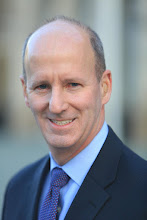
Monday, February 6, 2012

ARTICLE: A CLEAN SLATE

The below article of mine was published in last week's Pennsylvania Law Weekly.  It was also picked up for publication in the New Jersey Law Journal and the Texas Lawyer periodicals.  I hope you enjoy it.

A Clean Slate:
Ways to Ease Stress and Improve Your Practice

by

Daniel E. Cummins


The Legal Intelligencer/Pennsylvania Law Weekly


January 31, 2012


Another new year has come and 11 more months stretch out in front of us until the next one. It's still a clean slate and there is plenty that can be accomplished in the year ahead in terms of reducing stress and improving one's enjoyment and success in the practice of law. Here are five tips that may help in this regard.

Extend Professional Courtesies

You've heard it and I've heard it again and again: "It's hard enough being in the practice of law without (fill in the blank)."

It may help to look at 2012 and beyond as a time to start promoting professional courtesies among attorneys by exhibiting them yourself, perhaps even more than you may have in the past. As they say, what goes around comes around.

For example, requests for continuances should be granted without hesitation wherever possible by fellow attorneys, as well as the bench, particularly where there is no prejudice to the parties involved. Also, discovery that an opposing party is clearly entitled to under the rules should be produced in a timely fashion and without the necessity of unnecessary motions practice.

As difficult as it may seem at times, an attorney should also try to avoid taking on the emotional trappings that one's client may bring to a case. If litigators can remain above the fray and attempt to "counsel" their respective clients toward an amicable resolution, the entire legal system, not to mention the client, will benefit.

Also, spreading accolades always promotes professionalism among attorneys. As Dale Carnegie once wrote, "Be hearty in your approbation and lavish in your praise" toward others.

If an opposing counsel makes a good presentation in court or submits an excellent brief, let them know that while you disagree with the position stated, you were impressed nevertheless by the presentation. If you hear of a colleague or client who has won a case or earned an award of some sort, drop him or her a note, e-mail or text of congratulations. Lawyers are told day in and day out that their position is erroneous and, as a result, can never hear enough praise for a job well done.

And while you're practicing increased professional courtesies in 2012, don't forget that "please" and "thank you" go a long way.

Look Ahead

Resolve in 2012 to constantly look ahead 30 to 45 days on your calendar to see what's coming down the pike. Lawyers hate surprises; clients hate them more.

By constantly looking ahead you may be lucky enough to never again experience that awful feeling in the pit of your stomach that comes when you forget to tell a client about tomorrow's settlement conference with the court.

Looking ahead on your calendar also allows you to get a jumpstart on that motion or brief that may be due 30 days or so down the line. Having more time to write means having more time to research and edit, which guarantees a better final product that covers all of the applicable law and argument.

Read Updates

Another way to make your practice better in 2012 and beyond is to read any case updates you can get your hands on. By reading the Pennsylvania Law Weekly and its weekly "Case Digests" section, you are already ahead of those who don't read the paper.

A review of the blue-covered advance sheets sent out by the Atlantic Reporter is also another good way to stay up on the latest cases. The first few pages of every blue copy of the advance sheets contain a listing of the Pennsylvania state cases found in that edition along with a concise summary of the holding. A few more pages back you will periodically see a listing of recent Pennsylvania federal court decisions with concise summaries as well.

Even better than simply skimming these sources is engaging in the practice of actively committing these cases to somewhere in your memory by typing the case name, citation and concise summary into a running list on your computer. For easy reference later, this list can broken down in alphabetical order by topics pertinent to your practice ("Appeal," "Bad Faith," "Complaints," etc.).

It can be guaranteed that if you actively add to a list of important court decisions that are pertinent to your practice, you will be rewarded again and again by having these cases at your fingertips when you need them rather than having to try to rack your brain as to where you know you saw a particular case before.

Return Phone Calls

It may also pay off to plan, in 2012, to make an effort to return all phone calls within 24 hours. Quickly returning phone calls will certainly make your clients happy and keep them more informed on the status of their cases.

Your reputation among your peers as an attorney who is prepared and "good to deal with" will also be bolstered by promptly calling back other attorneys. Rather than having an opposing counsel still offended by one or more unreturned phone calls, the goodwill generated by your promptly returned phone calls over the course of a case may be able to be cashed in come settlement discussions time with more cordial negotiations.

In the scenario of being faced with a voicemail from an attorney or client you'd really rather not talk to, there are always the many options of responding by mail, fax, e-mail, text or (if you're lucky) voicemail. Efforts to keep the communications flowing will serve to keep the case moving along closer and closer to the resolution of the case, however that may occur.

Schedule Time Off

Believe it or not, it's okay to look out for numero uno on occasion. As we start to delve into 2012, look ahead several months on your new calendar and schedule some time off for yourself later while the coast is clear.

Scheduling vacations, or at least a few long weekends here or there, helps to rejuvenate one's self. Although a lawyer can never completely get away from the practice of law, pushing it to the back burner for a day, or several days, and focusing on the other, more important and/or enjoyable aspects of your life can result in your being refreshed upon your return to work.

Now, more than ever, it is not only beneficial but easier to get away for a while. With the advent of smartphones and e-mail, your virtual law office is always a phone call or a few keystrokes away.

So do yourself and yours a big favor — put down this article, look ahead on your calendar and schedule that time off. And, please, don't forget to send me a postcard.

Daniel E. Cummins is a partner and civil litigator with the Scranton law firm of Foley Cognetti Comerford Cimini & Cummins. His civil litigation blog, "Tort Talk," may be viewed at www.torttalk.com.

Sunday, February 5, 2012

Cumberland County Trial Court Comes Down in Favor of Severance Again in Post-Koken Cases

President Judge Kevin Hess of the Cumberland County Court of Common Pleas issued an Order on February 2, 2012 directing the severance of the liability claims (negligence) and the UIM claims (breach of contract) found in a single Complaint into separate trials in the case of Stumpf v. Erie Ins. Exchange and Barricklow, No. 2011 - Civil - 7290 (C.P. Cumb. Co. Feb. 2, 2012 Hess, P.J.).

Judge Hess also ordered that the liability(negligence) case would be tried first. The matters were allowed to remain joined together for all other pretrial proceedings including discovery. There was no bad faith claim in this case.

Tort Talkers may recall that, back on September 1, 2011, Judge M. L. Ebert of Cumberland County granted severance and ordered separate trials in the case of Henry v. Amin and Westfield Insurance Co. In the Henry case, the severance issue was decided on preliminary objections. In this more recent Stumpf case, Judge Hess granted a pre-trial motion for severance pursuant to Pa.R.C.P. 213(b).

I send thanks to the prevailing defense counsel for Erie Insurance, John A. Statler of the Lemoyne, PA law firm of Johnson, Duffy, Stewart & Weidner for advising me of this decision.  The prevailing defense counsel for the tortfeasor defendant was Attorney Hugh P. O'Neill, III of the Harrisburg, PA office of the Thomas, Thomas & Hafer law firm.

Anyone desiring a copy of the court's one line Order in Stumpf may contact me at dancummins@comcast.net.

Don't forget to scroll down the right hand column of Tort Talk (http://www.torttalk.com/) to view the Post-Koken Scorecard to research how different counties are approaching these novel issues.  There is still no appellate decision to date on the severance vs. consolidation issue.

Friday, February 3, 2012

Motion to Add Punitive Damages on the Eve of Trial Denied in Lackawanna County

In the case of Millan v. Pennsylvania American Water Company, et.al., No. 2003-Civil-4332 (C.P. Lacka. Co. Jan. 26, 2012 Nealon, J.), Judge Terrence R. Nealon of the Lackawanna County Court of Common Pleas addressed a Plaintiff’s Motion to Amend her Complaint on the eve of trial, and after the statute of limitations, to include a claim for punitive damages.

According to the Opinion, this matter arises out an alleged trip and fall event that occurred in front of the Plaintiffs’ residence. The Plaintiff-wife contended that she tripped and fell on elevated water shut-off valve owned and maintained by the Defendant, Pennsylvania American Water Company. The Plaintiff also sued a Co-Defendant that allegedly performed construction work for PAWC in the neighborhood during which they allegedly installed blacktop in a manner which permitted PAWC’s valve to protrude above the sidewalk level.

The Court’s Opinion notes that the case proceeded through discovery and was certified for trial. Twenty days after the final Pre-Trial Conference and three weeks prior to the start of trial, the Plaintiff filed a Motion seeking to amend the Complaint under Pa. R.C.P. 1033 to include a claim for punitive damages.

The Plaintiff based this motion upon information that two PAWC representatives had allegedly testified in depositions in other matters involving allegedly similar incidents. The Plaintiff submitted the other deposition testimony which established that PAWC was aware of the tripping dangers and hazards to the public and also allegedly established that PAWC had acted recklessly and/or with reckless indifference to the rights of safety of persons, including the Plaintiffs with respect to this matter. Accordingly, the Plaintiff asserted that she should be permitted to amend their Complaint to include a claim for punitive damages against PAWC.

After reviewing the submissions of the parties, Judge Nealon detailed the procedural law governing the timing of this request as well as the substantive law concerning the merits of the claim for punitive damages.

Reviewing the evidence presented, the Court found that the Plaintiffs had not identified any deposition testimony or other evidence which (1) suggested that the Defendants had a subjective appreciation of any risk of harm to which the particular Plaintiff in this matter was allegedly exposed to in front of her residence and/or (2) established that the Defendants had acted or failed to act in conscious disregard of that risk. Accordingly, the court found that the Plaintiff had not identified any substantive factual or legal basis to support a granting of the Plaintiff' motion leave of court to amend the Complaint to add a claim for punitive damages.

Additionally, Judge Nealon also found the Plaintiff’s motion to be untimely. The court pointed out that the Plaintiff’s original Complaint did not allege recklessness or any facts remotely indicative of wanton, willful or reckless conduct.
Judge Nealon noted that, if a timely filed Complaint did contain such allegations but did not affirmatively and specifically demanding punitive damages, a Plaintiff may thereafter amend the Complaint to include a claim for punitive damages based upon those facts previously alleged in the original Complaint.

However, relying, in part, upon the case of Romah v. Hygienic Sanitation Co., 705 A.2d 841, 858-860 & n. 9 (Pa. Super. 1997), the court found that, where the original Complaint simply alleges negligence and a Plaintiff later seeks to amend the Complaint to assert reckless indifference and include a claim for punitive damages after the statute of limitations has expired, such requested amendment is time barred by the applicable statute of limitations.

Judge Nealon noted that, since the original Complaint in this matter only alleged ordinary negligence on the part of the Defendants, and given that the Plaintiff’s request to amend the Complaint was filed more than ten (10) years after her fall, the motion to add punitive damages was “clearly time barred.” 


Anyone desiring a copy of this opinion may contact me at dancummins@comcast.net.

Thursday, February 2, 2012

THREE (3) MONTHS FROM TODAY - THE TORT TALK EXPO 2012 - REGISTER NOW TO SAVE YOUR SPOT

The lineup has been finalized for the TORT TALK EXPO 2012 CLE Seminar, which is set to take place on May 3, 2012 at the Mohegan Sun Casino in Wilkes-Barre, Pennsylvania.

Also, I have received approval from the Pennsylvania CLE Board, approving 2 substantive and 1 ethics credit for the event.

In addition to my presentation of an Auto Law Update, the other presenters will include Attorney Paul Oven of the Moosic, PA law firm of Dougherty, Leventhal & Price on a Civil Litigation Update, as well as noted expert radiologist (and attorney) Dr. Michael Brooks presenting on diagnostic studies in personal injury matters, with an emphasis on auto accident matters.

The stellar Judicial panel for the "View from the Bench" portion of the program will consist of Pennsylvania Supreme Court Justice Michael Eakin, President Judge of the Superior Court Correale Stevens, and U.S. Third Circuit Court of Appeals Judge Thomas Vanaskie.

President Judge Thomas F. Burke, Jr. will also provide a "State of the Luzerne County Bench" presentation, reporting on which new judge will be handling which types of cases along with an update on the current status of the Luzerne County civil trial backlog.

The View from the Bench portion will be presided over by former Luzerne County Judge Joseph Van Jura, who recently completed his appointment and has returned to private practice where he is also offering his services for Mediations and Arbitrations.

In addition to Door Prizes and Raffle Prizes, there will also be a number of Table Vendors at the seminar displaying their services offered to civil litigators. To date, the following providers have agreed to sponsor and appear as Table Vendors at the event (in alphabetical order):

Courtside Documents: www.courtsidedoc.com


Digital Justice: www.digitaljustice.net


Minnesota Lawyers' Mutual: www.mlmins.com


Ringler Associates: www.ringlerassociates.com


The TORT TALK EXPO 2011 is designed to be a CLE Program that will be as entertaining and informative as the posts regularly sent out from the Tort Talk blog.

The seminar will be immediately followed by a cocktail reception at which attendees can continue to network with fellow lawyers, insurance professionals, and members of the federal and state judiciary from around Northeastern Pennsylvania.

Also, a portion of the proceeds from this event will be donated to a local charity to be determined.

The CLE Program will include the following topics and presenters:


TORT TALK EXPO 2012


Presented by

Daniel E. Cummins, Esquire

at the

MOHEGAN SUN CASINO at POCONO DOWNS

Thursday, May 3, 2012

12:30 p.m. to 4:30 p.m.

2 Substantive & 1 Ethics CLE Credits

Followed by Cocktail Hour (4:30 – 6:30 p.m.) at Breakers in the Mohegan Sun

12:30 – 1:00 pm Registration


1:00 – 1:30 pm: The Tort Talk Auto Law Update

Presenter: Daniel E. Cummins, Esq.

1:00 – 1:30 pm: The Tort Talk Civil Litigation Update

Presenter: Paul T. Oven, Esq.

2:00 – 2:15 pm BREAK

2:15 - 3:15 pm: Introductory Medical Conditions & Radiological Issues in Auto Accident Injuries

Presenter: Dr. Michael L. Brooks, M.D., J.D., FCLM

3:15 – 3:30 pm BREAK


3:30 – 4:30 pm A View from the Bench: Ethical Issues in Legal Writing and Advocacy Before the Court in an Electronic World

Moderator:
Hon. Joseph Van Jura (Ret.)


Presenters:

Pennsylvania Supreme Court Justice Michael Eakin

President Judge of Superior Court Correale Stevens

U.S. Third Circuit Court of Appeals
Judge Thomas I. Vanaskie

Luzerne County President Judge Thomas Burke, Jr.

COCKTAIL RECEPTION TO FOLLOW

AT BREAKERS

4:30p.m. - 6:30p.m.


Costs below cover both CLE Seminar and Cocktail Reception:


Claims professionals/representatives
and risk managers
$25.00


Lawyers
$165.00


Please make checks payable to "Tort Talk."

For reservations, please complete the requested information below and return it to the address noted below or e-mail it to dancummins@comcast.net.


Name(s)____________________________________


Firm/Company_______________________________


PLEASE MAIL REGISTRATION FORM AND PAYMENT TO:

TORT TALK
c/o Daniel E. Cummins, Esq.
Foley, Cognetti, Comerford, Cimini & Cummins
507 Linden Street
Suite 700
Scranton, PA 18503

For more information, contact Dan Cummins at 570-346-0745 or at dancummins@comcast.net.


HOPE TO SEE YOU THERE!

Tuesday, January 31, 2012

Form Facebook Discovery Motion and Brief


Tort Talkers are well aware that there is an increasing trend in Social Media Discovery litigation in the Pennsylvania courts (and nationwide).

I recently had an opportunity to draft a Motion and a supporting Brief on a Motion to Compel a Plaintiff to produce his Facebook login information.  The discovery issue resolved without me having to actually present the motion in court. 

That, however, has left me with a form Motion, Brief, and proposed Order for future reference.  Anyone desiring a copy of these forms (names in the documents have been change to protect parties' privacy) in the event that they may help you to draft such a motion/brief in your case may contact me at dancummins@comcast.net.

Sunday, January 29, 2012

Plaintiff's Act of Permitting Unauthorized Person to Drive Results in Plaintiff's Vicarious Liability for Own Injuries

In its recent opinion in the case of Price v. Leibfried, No. 332 MDA 2011 (Pa. Super. Dec. 21, 2011 Gantman, Lazarus, and Olson, JJ.) (Opinion by Lazarus, J.), the Pennsylvania Superior Court addressed 75 Pa. C.S.A. §1574 which pertains to permitting unauthorized person to drive in the context of an auto accident litigation.

In this case, the evidence before the court confirmed that this matter involved a two car motor vehicle accident. The Plaintiff was a passenger in her own motor vehicle, which rear-ended a tractor trailer. The Plaintiff’s vehicle was being operated by her friend at the time of the accident  The Plaintiff named the friend as one of the defendants in the lawsuit.

Prior to the accident, the Plaintiff and her friend had been drinking alcohol throughout the evening.

In her Complaint, the Plaintiff alleged negligence against her friend and also sued a local tavern under the Dram Shop Act.

At the close of discovery, the Defendant driver filed a Motion for Summary Judgment asserting that the Plaintiff was vicariously liable for her own injuries and cited to 75 Pa. C.S.A. §1574 (Permitting Unauthorized Person to Drive).

In its opinion, the Pennsylvania Superior Court affirmed the trial court finding that there was no genuine issue of material fact that the Plaintiff knew, prior to the accident, that the Defendant driver did not have a valid driver’s license on the night of the accident.  There was no issue of fact that the Plaintiff also knew that the Defendant driver had been drinking beer and hard liquor on the night in question.

Based on these facts, the Superior Court agreed with the trial court decision that, as a matter of law, the Plaintiff was therefore vicariously liable for the Defendant driver’s negligence in the operation of the Plaintiff's vehicle pursuant to 75 Pa. C.S.A. §1574, as interpreted under the case of Terwilliger v. Kitchen, 781 A.2d 1201, 1206 (Pa. Super. 2001).

The Superior Court agreed that no reasonable minds could differ on a conclusion that the facts established that the Plaintiff had knowledge that the Defendant driver was not a licensed driver and that, despite this knowledge, the Plaintiff still authorized or permitted the Defendant driver to drive her vehicle. Since the Plaintiff therefore violated §1574 of the Motor Vehicle Code by allowing an unauthorized person to operate her vehicle, the court agreed that the Plaintiff was vicariously liable for the Defendant driver’s negligence.

The court went on to state that, since the Plaintiff was vicariously liable for the Defendant driver’s actions, she could not recover damages from that Defendant.

In so ruling, the court allowed the remaining claim by the Plaintiff against the Defendant tavern to proceed to trial where an apportionment of the percentage of liability between the Defendant driver and the tavern would be left for the jury to decide.  Based upon this ruling, however, the Plaintiff would not be permitted to recover against the Defendant driver on any verdict entered against that particular defendant.

Anyone desiring a copy of this opinion may contact me at dancummins@comcast.net.

Friday, January 27, 2012

Third Circuit Swerves the Other Way in Debris-in-the-Road Case

On January 26, 2012, the Third Circuit Court of Appeals issued an interesting uninsured (UM) motorists benefits decision in the debris-in-the-road case of Allstate v. Squires, No. 11-1664 (3d Cir. Jan. 26, 2011 Sloviter, Vanaskie, and Greenberg, J.J.)(Opinion by Greenberg, J.).

I previously put up a Tort Talk post on the District Court's decision in this matter last year denying coverage under the facts presented.  That post can be viewed here.  Now the Third Circuit has reversed in favor of a finding of potential coverage under the facts presented.

In Squires, the injured party insured was driving his pickup truck when he allegedly swerved to avoid a cardboard box lying in the middle of his lane.

Significantly, Allstate stipulated in this matter that an unidentified vehicle dropped the box.  Allstate rejected the injured party's claim for uninsured motorist benefits and sought a declaratory judgment. The insured responded with counterclaims for breach of contract and insurance bad faith under 42 Pa. Cons. Stat. § 8371.

At the trial court level, the District Court had entered judgment for Allstate, finding that the injuries did not "arise out of ownership, maintenance or use of an uninsured auto."

Now with this decision, the Third Circuit has reversed, rejecting the main argument by Allstate that the harm was caused by the box in the road and not by any vehicle as required to support a UM claim under the insurance policy language and Pennsylvania law.  The Third Circuit relied, in part, on the notion that physical contact with an uninsured vehicle is not required for an accident to "arise out of" the use of an uninsured vehicle.

The Court ultimately held that, accepting for purposes of appeal the stipulated facts that the debris was placed on the road by an unidentified vehicle, the Court found that the accident arose out of the maintenance and use of a motor vehicle such that there was a sufficient causal connection to support a finding of potential coverage for the claims presented.  The Third Circuit stated its belief that the Pennsylvania Supreme Court would rule in the same fashion if presented with the same case.

It is noted that this decision in Allstate v. Squires by the Third Circuit is contrary to a number of trial court decisions recently issued on the same issue, none of which was noted in this Opinion.  Summaries of those trial court opinions can be found here, here, and here.

Perhaps a significant difference between the Third Circuit's decision in Allstate v. Squires and those other trial court decisions on debris-in-the-road cases is that it does not appear that there was any stipulation in any of the trial court decisions that the debris on the road had indeed come from a vehicle.  Rather, in those cases, the injured party was without any evidence to establish how the debris came to be on the road.

The Third Circuit's decision  Allstate v. Squires also has an interesting tidbit in footnote 11 of the opinion in which footnote the Court confirmed that it was not deciding or taking any position on any aspect of the Plaintiff's bad faith claim against Allstate for its denial of coverage.  Interestingly, the Court went on to state in that footnote:

"We note, however, that our experience in addressing Pennsylvania insurance coverage disputes has demonstrated that insureds tend to bring bad faith claims when insurers reject their claims even though there are legitimate disputes over whether the claims are covered."


Anyone wishing to read the Third Circuit's Opinion in Allstate v. Squires can click on this Link.